Stem Cell Therapy for Autism: Hope, Evidence & Informed Consent | BetterStem Founder, Greice Murphy
Game plan
Can stem cell therapy help children with autism, and how should parents evaluate treatments that remain investigational?
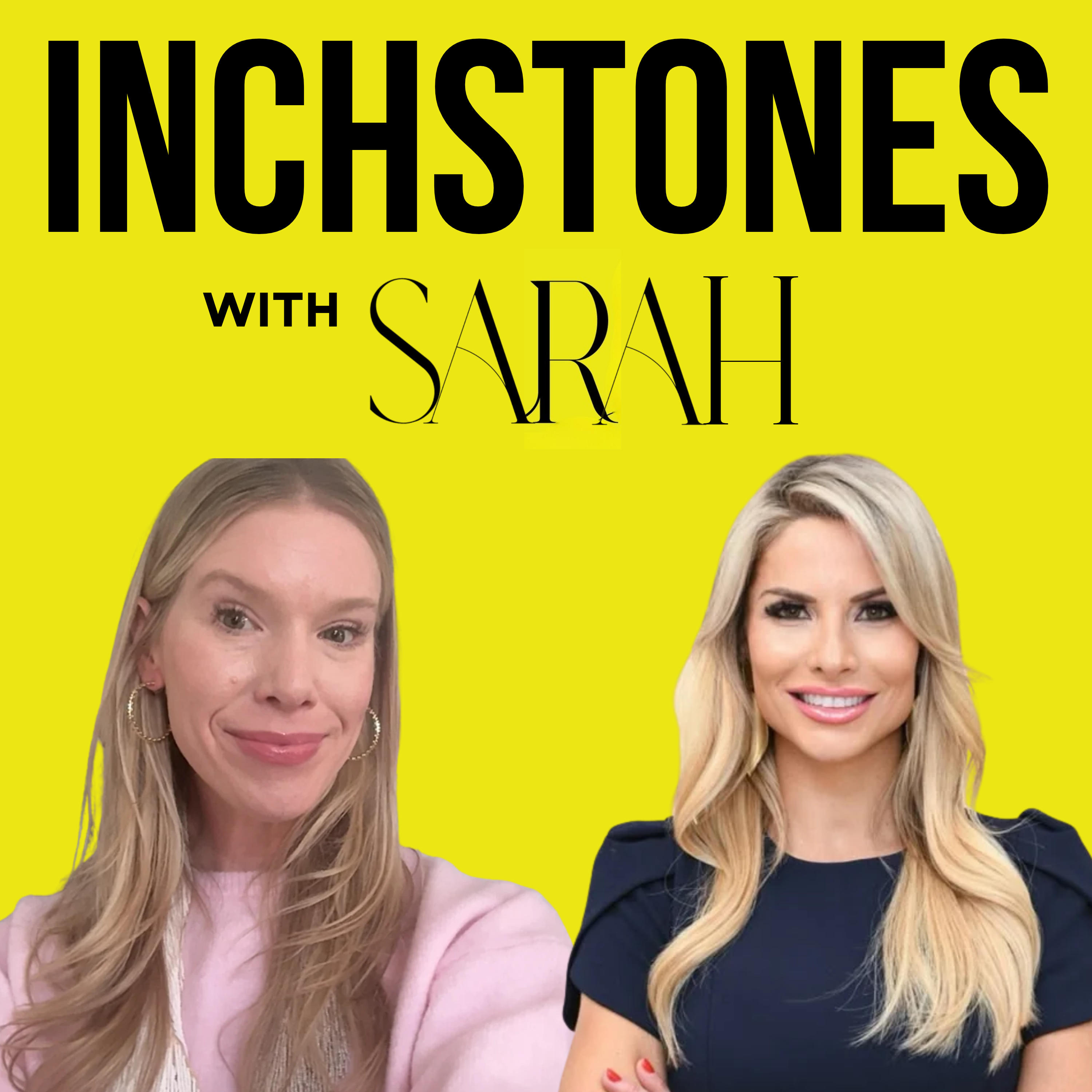
In this INCHSTONES Podcast conversation, Sarah Kernion welcomes Greice Murphy, Founder and CEO of BetterSTEM, to explore stem cell therapy for autism, regenerative medicine, informed consent, and the responsibility of balancing parental hope with scientific evidence.
Together, they discuss:
Why stem cell treatments for autism remain investigational and are not FDA-approved
What parents should understand when outcomes cannot be guaranteed
The importance of rigorous clinical trials, baseline assessments, and measurable outcomes
How parent observations can inform assessments of quality of life
The ethical responsibility to communicate uncertainty and avoid unsupported promises
BetterSTEM's approach to individualized evaluation and family support
For families navigating profound autism and nonspeaking autism, curiosity about emerging science deserves both compassion and scientific rigor.
Hope should inspire research. Evidence should guide decisions. Transparency should never be optional.
Explore more at www.inchstonespodcast.com.
Greice Murphy is the Founder and CEO of BetterStem, a pioneering company focused on advancing personalized medicine and investigational stem cell therapies for children with autism. Born in Brazil, her passion for autism care began with her cousin Raul, inspiring a lifelong mission to improve access to innovative healthcare. An award-winning entrepreneur and EY Entrepreneur of the Year, Greice previously founded Advanced Care Partners, one of America's largest pediatric home healthcare providers. She also owns Miami Stem Cell. Through BetterStem, Greice is redefining autism care with a physician-led, whole-child approach that explores underlying biological factors beyond symptoms and behaviors.
Introduction: Hope, Evidence, and Responsibility
Speaker A: Hey, everyone. Welcome back to Inchstones. There really is no better motivation than a parent's desire to improve their child's quality of life. And for those of us as caregivers raising children with profound autism, that innate desire often leads us to emerging science, new research, and a lot of possibilities that I believe that conventional Western medicine really hasn't fully explored. And I also deeply believe that hope really isn't evidence and possibility is not proof. And at the same time, continuing to have these conversations is what keeps me, and I know so many of you going.
Speaker A: So today I'm continuing my conversation with Gracie Murphy, founder and CEO of Better stem, to explore the responsibility that comes along with offering these investigational and regenerative medical treatments to families like ours. We're going to talk about, you know, scientific uncertainty and informed consent and the ethics around this and what it takes to actually move this promising, very, very promising intervention into toward established medical care for children like ours. Because parents deserve the freedom to be curious and the freedom to choose the opportunity to ask these really, really difficult questions and the information that I believe is necessary to make the most thoughtful decisions.
Speaker A: So the question isn't whether we should have hope, it's what responsibility do we as mothers and caregivers have to that hope that Grise and Better STEM offer. So, Gracie, welcome back to Inch Zones. Thank you so much. Very happy to be here. So we talked so much in the previous episode about the science behind stem cell therapy. And I wanna move this now, this conversation to really one of hope and evidence and the responsibility of families. And one thing that I think about, it really never leaves my brain is how deeply parents just want to help their children.
Speaker A: And, you know, hope is so powerful and it can make families really vulnerable to promises that science really hasn't substantiated yet. So how do you ensure that the hope really never gets ahead of the evidence here? As someone who is so beautifully serving the population of children like mine,
Speaker B: thank you so much. Hope is a powerful thing that parents bring into the conversation. And is our responsibility really to be transparent of what telling them what we know, what we don't know, and what is the evidence have shown us so far? As you know, stem cells is still investigational, it's not FDA approved, but there are some evidences that can really help with certain markers of inflammation helping to regulate the immune system and therefore help with the conditions. I'm going to have to stop here, but I'm, I'm listening.
Speaker B: I'm hearing a big echo.
Technical Audio Interruption
Speaker A: Oh, really? I don't Hear anything? Yeah.
Speaker B: Okay, let me hold
Speaker A: it. Oh, now I hear your echo from me on your side. I'm not hearing it here, but I hear it on yours.
Speaker B: Do you think that is bad on when it comes to the recordings? Do you want. Let me take a look here. Hold on. Cause you can.
Speaker A: I had echo cancellation on.
Speaker B: Okay. My Internet is good.
Speaker A: Yeah, everything's fine here.
Speaker B: Give me one second. It is, like, aesthetic.
Speaker A: I hear it from your end. I don't. Like, whenever I. When I'm quiet and you talk, I hear it.
Speaker B: Okay, so that's gonna be bad on the recording then, right?
Speaker A: It won't be, because the audio editing takes all of that out. But if you want, why don't we just go back? Why don't we just, like, leave the studio and come back so that we can just reset your side? All right, bye. All right, now do you hear me echoing?
Speaker B: Yes, I can hear you well. Can you hear me well?
Speaker A: Mm. All good.
Speaker B: All right. All
Speaker A: right, it's still recording. So we're just going to go from. Let's see here
Speaker B: from where you talk about hope.
Speaker A: Mm. I'm gonna end the last thing and say. Hold on. I'm gonna say the last question, and then it'll edit it from there.
Balancing Hope and Evidence in Treatment Conversations
Speaker A: So, Gracie, how do you ensure that the hope never really gets ahead of the evidence?
Speaker B: Absolutely. So when you sit across a parent that has spent years and years of research to find the answer, we understand really what's in it is at stake. And here at Vetti, we take that very responsibly and really seriously. As a founder, I can be excited as much as I can about regenerative medicine, but you have the responsibility to tell them the truth in what we know, what we don't know, and what is at stake. So we start with a very frank conversation. Understanding about what their goals are and their expectations is as well.
Speaker A: Yeah, I mean, that really just again, it's sort of this medium, Right. That parents are thrown into when you have children with a diagnosis like autism. Because uncertainty sort of becomes like, uncertainty is the pool, is the vat, is the water that you're swimming in. And all you want to do is reduce that uncertainty. Right. Is to get, like, these firm answers and, like, pathways. And I think that the understanding, as we know and grow into understanding more about stem cell therapy and regenerative medicine, is that we have to still be able to sit with the uncertainty that we don't know exactly specifically what those outcomes will be.
Speaker A: And it kind of leads me to my next question, like, how do you talk to people when outcomes can't be guaranteed? Like what does better stem and do and like the actual facilitating of that conversation. So when someone comes and says, well, why can't you, why can't you do that? How do you answer as a practitioner?
Speaker B: Well, as being an investigational therapy, we cannot make any claims, but I think it's, it's beyond that. I think, I think what is important here is understand that this is not a stem cell treatment only.
Looking Beyond Autism: A Whole-Body Systems Approach
Speaker B: This is a program that looks at, beyond the autism diagnosis. We look deep what may be happening quickly to the child to see what else can we optimize in the body. You know, even though autism is a. Yes. So even though autism is a neurodevelopmental condition, kids with autism also, they experience other medical conditions that need to be interpreted and we need to be investigated so we see what can be driving the behaviors and other conditions that we see today.
Speaker A: I'm so glad you mentioned that, and this is more of a tangent, but I think that the community is starting to realize we cannot divorce and separate the systems of the body from just the neurological disorder. And I think that there can be great comfort in taking a systems understanding of your child's body to know that while, yes, the neurological disorder is categorized like this, the stem cell therapy or regenerative medicine that is going to take a massively different macro systemic level of the whole body.
Speaker A: And I, and I wonder if that's where currently, this day and age, with mothers around my age, with younger children that are realizing that we've been sold the fact that no, this treatment should handle X and it's going to give you a certain outcome. No, this is saying X, Y, Z are all included and we don't know the effect of the treatment on any one of those multiple systems. And then the entire system as a whole, there should be comfort in that. But I understand why. Because of how western medicine has conditioned so many of us to think that we don't think of that as the right way to go.
Speaker A: We want to be very specific and say it's gonna do this when it might be tackling something that you haven't even thought of from the root of a disorder or a systemic lens.
Speaker B: That's correct. And you can't just, you can separate the brain with the rest.
Speaker A: That's
Speaker B: right. Everything is interconnected. And I don't think the. The system today, as fragmented as it is, they are not integrating the care in the right way. A good physician provider needs to support more than the brain. It has to support body as a system, starting with nutrition, starting with the gut health started with most exposure, toxins, heavy metals. Everything plays a little bit, a little piece of the puzzle that we have the responsibility, our job is to put the puzzle together to understand holistically what is a 360 approach looks like.
What Evidence Would Validate Regenerative Medicine
Speaker A: That's right. That's right. I love that you shared that. So if you're looking, you know, five years down the road and what kind of specific evidence would you say would convince you that, you know, regenerative medicine starts to become more of the mainstream autism care and what findings might cause you to reconsider that approach to things as we look down the, you know, time doing what time does.
Speaker B: Yeah. Yes, for me it comes down to reproductible evidence. And how can we really measure this consistently? We need larger, well designed randomized clinical trials, ideally conducted by different companies, independent companies, that compare the outcomes of these treatments against controlled groups. And that is one of the reasons when we started Baristin, we start with baseline testing and a lot of data, really we can throw against after the treatments that we do to see at the markers level, at the biology level what has changed.
Speaker B: Because you have subjective and objective data and trust me, a parent telling me my child is sleeping better means more than a blood marker. My child is, is eating more foods. To us, quality of life is like watching my office. So, but, but when you're talking about making claims that this is going to work for everybody at this level, you do have to have those studies done. And unfortunately right now we don't have it.
Speaker A: Yeah, it's one of those things that I know boggles my mind, absolutely boggles my mind as a parent. And I don't think that you would find a single other autism mom that wouldn't say the same as to like. So you're telling me that these are questions that are being begged of, begged to be asked by parents like me and who. There's just not. There just aren't studies that are funded for it. And I really do hope that because of podcasts like this, because of the work that you're doing, because of really social media being able to hit so many different, more pockets that people start asking for, for these studies to be that and hopefully, you know, with, with what's currently happening, you know, within our federal government, it can.
Building Better STEM: Science Over Hype
Speaker A: What, what do you believe, you know, when we're working with parents and you're working with them directly, who would really do almost anything, right? We do almost anything to improve our child's quality of life. And to your point, it might not be the event of improving the quality of life or how it improves, might not be what you had thought of or what your intent was, but how do you build a company like Better STEM where the science sets the limits of the promise and instead of just the depth of the parents hope?
Speaker A: Because I think there's something really beautiful in that example that you shared live is that a parent might want one thing or desire or have an intent for stem cell therapy and regenerative medicine to do one thing and it might do something completely different. How beautiful is that? What an incredible thing to experience. So tell me, tell me more about that because I think that the emerging medical fields are responsible for sharing that that might be how outcomes happen. Not really what the parents hope is, but what actually ends up happening.
Speaker B: Yeah, yeah. I take this very seriously. This is a very personal mission to me. And I grew up with a level 3 autistic cousin in the middle of nowhere in Brazil. So I have seen firsthand what my family has gone through. So which ties back to what's really hope, what's evidence and what should we say or not say? You know, and responsibility comes with being willing to say no, Being willing to say not now. We're not here to sell anything. We're not here to educate and make the parents comfortable with the idea of experimenting in innovative treatments that that may have no effect or may have a lot or we can't say it.
Speaker B: We cannot make claim. This is not a drug. You know, this is still investigational. But there is really a fine lining between, you know, what is an opportunity. Innovation versus science. You know, innovation is what can we do in science, is what we're doing. Working and analyzing this together and being transparent with the parents is number one for us. When a parent first contact us, our job is not to sell treatments.
Balancing Clinical Data with Real-World Parent Observations
Speaker B: Our job is to understand drug, to understand what's going on with their children. So we can basically guide them throughout the steps and see what else can be done to optimize the treatments that they may be or not.
Speaker A: Yeah. And I think what I hope is becoming such a change is that I know that tests can be done and markers can be shown and discernment comes down to taking in those numbers, taking the actual data of your child, but that also a source of a lot of that data relationally is what the parents are seeing at home day to day, not just what a marker or a number is going to show to a clinician. And it's something that I believe so deeply in because there are oftentimes tests that can be run that say one thing.
Speaker A: Yet the experience you have with your actual child can be completely different given the environment. And I think that when we talk about pushing and furthering innovation in this space, we have to allow for the fact that not all data that's collected should be seen equally, that there are other markers that the parents and environments and the teachers and educators and really just, you know, anyone that has experience with one of these kind of children, that, that observation, those observations and, and those real world experiences are, should be baked into the discernment of what is to.
Speaker A: To next be chosen to help them and to have greater agency. Gracie, is there anything that you would, that you would love to share before we go here that really continues to remind parents of what kind of support is out there and specifically for. For treatment options like you offer at Better stem?
Better STEM's Approach: Testing, Optimization, and Personalized Care
Speaker B: Yeah. At the end of the day, looking back at the mission statement and why are we doing. What we're doing is we don't want to be recognized by how many treatments we have done. We want to be recognized as how much we helped to advance innovative care. And our. We are not a stem cell provider. We are a program that really connects the dots in this ecosystem that gives parents the support they need in one place. Starting from looking at. And everything is done in a way that the parents can do at home so they don't have to travel other than, or come to the clinic other than to receive themselves if that is appropriate route that the physician has recommended.
Speaker B: But if, if I were to talk to a parent, I first would say what tests have you done? How much do you know about the biology of your child? And if they haven't done anything, I would highly recommend you to start with the comprehensive baseline testing that's going to test gut heavy metals, mold exposure, even the way that the child is metabolically detoxing from that on. We will then optimize the body before we even think about stem cells. And majority of the scenarios that we see is dietary, is folate receptor, antibody.
Speaker B: Right. You're more familiar about this here. So it's again, this is a puzzle. Ast is the puzzle together that will give the parents access to innovative therapies and also testing now treatment that we can holistically look at one child as individual personalized care and holistically a 360 degree approach.
Speaker A: Yeah, I love that. And I and that mirrors so much of what I try to say to parents all the time, is that you get to do this, you would never have chosen it. There's no, there's no, you know, raising of the hands for people to take on this level of hope and discernment together.
Closing Thoughts and Encouragement for Caregivers
Speaker A: And yet you get to do this. So when you find a place that can incorporate all of that and support you on this really, really, really complex journey, you should take it as a win because you get to do this. And the more support. I believe that we are meant to be supported in life through whatever we're. And so to take that as a positive, as a beautiful positive to a journey that you, what one may never have chosen, yet you do get to do and find such deep satisfaction in unearthing more and more about giving your child the best quality of life and agency.
Speaker A: Gracie, thank you so, so much for continuing this important conversation. I really do believe that we, when we remain curious about emergent science and, and also acknowledge what hasn't yet been demonstrated, we can better pursue health and quality of life for our children without promising a certain possibility as a established solution and hope should inspire scientific inquiry. Evidence should absolutely guide medical decisions, but transparency should never be optional. And so I love that you're being so transparent as a company, as a clinician, and I really appreciate you joining here on Inch Jones.
Speaker A: To everyone listening, if these conversations help you navigate the complexities of profound autism and non speaking autism disability caregiving, please give Itchnos a follow, leave a review and share this episode with another caregiver or parent. Because these are the kind of important conversations that we're constantly happening to move the needle towards better quality of life for our kids. And we'll be listing all of the details in which you can find out about how your child can be treated through Gracie and her team at Better stem.
Speaker B: Thanks so much for the opportunity.
Speaker A: Fantastic. Until next time, here on the Inchstones podcast. Awesome.
 Apple Podcasts
 Castbox
 Castro
 Goodpods
 Moon FM
 Overcast
 Pocket Casts
 Podbean
 Podcast Addict
 Podcast Republic
 Spotify