Why the National Autism Association Is Returning to Its Roots | NAA Executive Director, Krystal Higgins
Game plan
What does meaningful autism advocacy look like when families need both immediate safety resources and answers to difficult medical questions?
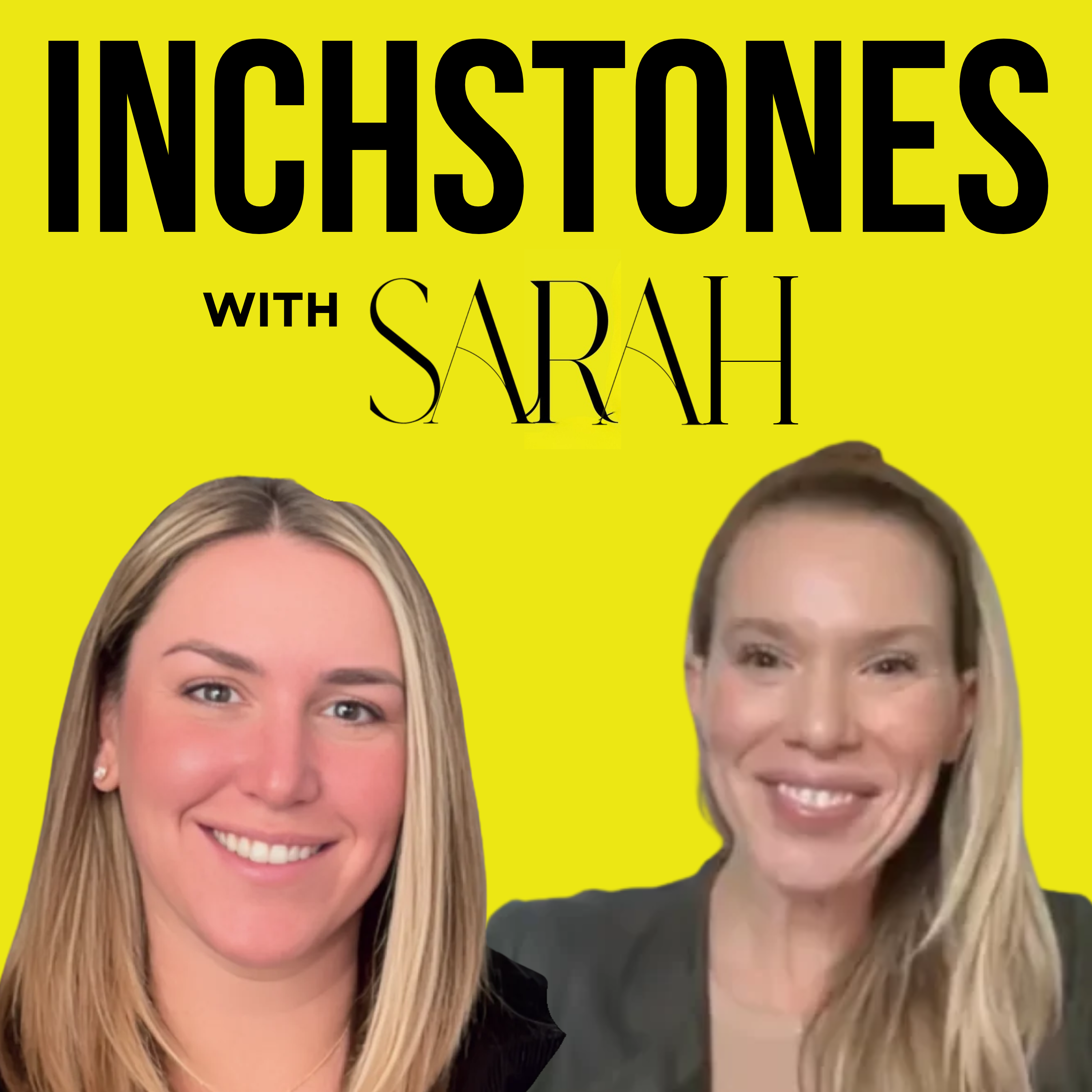
In this episode of the INCHSTONES Podcast, Sarah Kernion welcomes Krystal Higgins of the National Autism Association (NAA)** to discuss the organization's evolving approach to profound autism, parent advocacy, wandering and elopement prevention, and emerging conversations about leucovorin.
Krystal shares how NAA's parent-led history shaped its safety initiatives and why a recent educational webinar on leucovorin prompted renewed conversations about the information autism families want.
Together, Sarah and Krystal explore:
- The National Autism Association's history and mission
- Wandering and elopement safety for autistic children
- Parent demand for information about leucovorin
- The importance of discussing complex autism experiences without dismissing families
- Why different perspectives within the autism community can coexist
Families deserve safety, meaningful information, and a voice in the conversations shaping their children's futures.
Discover more at www.inchstonespodcast.com.
Introduction to Crystal Higgins and NAA
Speaker A: Hey, everyone. Welcome back to the Inch Jones podcast. Autism. It is one diagnosis that continues to be asked to hold this like, astonishing range of human experience, right? And somewhere in this very large tent of families, let's call it that today. This tent of families managing non speaking autism and elopement and medical complexities and self injury and 247 supervision and the increasingly pressuring question of lifelong care is where my guests and I sit very much right next to each other.
Speaker A: My guest today is Crystal Higgins. She is the executive director of the National Autism Association. She's an STC practitioner herself, and more importantly, a mother whose advocacy began at home. And Kristen works tirelessly as a very polished and astute autism advocate. And she's in the conversation that tends to get considerably less polished, as I like to say, around that severe disability. And so today we're going to talk about things, mother to mother, about those autism realities that don't really fit into any one slogan and what families carrying the greatest support needs are carrying and the ones that actually get a seat at the table.
Speaker A: So, Crystal, thank you again for joining and welcome to Inchstones
Speaker B: Thank you so much for having me. I'm so grateful to be here with you. And I really appreciate how eloquently you talk about some of the hardest truths that so many families are living. Yeah,
Speaker A: well, that's a very nice compliment. It's amazing that the right, it's the yin and yang of this right for to be eloquent in a space that's pretty dirty and has a lot of language that is un, unhinged. I appreciate that. So thank you. And I love hosting these conversations.
Crystal's personal story: daughter's birth injury and healing journey
Speaker A: Before we jump into your work, like your work outside the home, I would love to start weirdly with your own story. And how did your experience as a mother lead you to advocating for your own child, to the national platform that you serve now?
Speaker B: Yeah, so my story is actually a little bit different because my story started before I became a mother. I was in these worlds of special education. And here in little Rhode Island, I happened to meet these mothers who had really changed the trajectory of their children's lives. And this is back in the early 2000s. You know, social media was in its infancy, and so these mothers were loud locally. They were really fierce and wanting to share what they were learning with our community. So they really introduced me to this world of autism being medically relevant, which back then people weren't talking about it.
Speaker B: And so I learned so much from them, from the experts and resources that they brought in, and it totally Changed the way I was teaching at the time at a behavioral hospital, because once you start to see autism through a medical lens and less as intentional behavior, it changes everything. And so that was before I even had children. And when my husband and I decided to become parents, in my naivety thought, I know how to have a healthy pregnancy, and I know how to protect my baby. And my daughter was born, and she suffered a severe traumatic brain injury at birth.
Speaker B: Um, her prognosis was very grim. She was on life support. By the time she was stable enough to come home, I mean, the data and the test results were really not in our favor. And so I was sent home with this barely stable, beautiful baby and told, you can do nothing but wait and see. And, you know, I just knew from everything I had, I had learned about optimizing health through these previously sick children in the classroom that there must be something else. And so I called one of those moms, and she's a feisty, fierce, and she went, bullshit.
Speaker B: You need to look into this and this and this. And. And she gave me doctors to call. And we went on a very long journey to healing our daughter. And, you know, that it really taught me two things.
Canaries in the coal mine: autism as a biological, medical issue
Speaker B: And one is that mothers will listen to other mothers. You know, there was not a professional I would trust with who had nothing but negative outcomes to tell me about. And the is that these kids are canaries in a coal mine. Right. This has been said aids, and it's true for all of us. I think this is what people sometimes don't understand is it's not autism. I think is the most critical issue we are facing in humanity today, in healthcare. But it's not just autism. All of this is relevant to so many conditions.
Speaker B: And we're in a place where, you know, I know you're painfully aware chronic disease is on the rise.
History and evolution of the National Autism Association
Speaker B: We are facing unprecedented levels of serious health issues. And what these doctors and researchers are learning and what we're applying because of this epidemic really has the power to change the outcomes for a lot of people across the globe. And I think that's something that really keeps me a little bit hopeful when everything feels so overwhelming.
Speaker A: So, Krystal, what is actually going on with NAA right now? The National Autism Association. And where do you see all moving in the next few years?
Speaker B: Yeah, thank you for asking. So NEA is over 20 years old, and it was founded by moms who found each other on, like, Yahoo chat rooms or something.
Speaker A: Wow.
Speaker B: Yes. In the early 2000s. And we have always been focused on the most urgent issues. And, you know, there's been some changes in the community along the way. And what. What happened was we were talking about making autism biologically definable and therefore treatable. Taco was doing very similar work in terms of parent education. Then members at NEA started to realize the wandering and elopement patterns that we were seeing in their own children. And one member in particularly in particular, Lori McIlwain, she began tracking those cases.
Speaker B: And so when we started doing that, a national restaurant chain offered to do a nationwide fundraiser for us. And in that space, what happened was they got attacked on Twitter. Twitter was big. They 11 or 10 saying, how. How could you support this organization who talks about all these things? Right? And so,
Speaker A: wow, this
Speaker B: restaurant said, we can't do this unless you give a statement, a very specific statement. And NA said, we will not turn our backs on mothers who are telling their truthful stories. And at that time, to protect our wandering and elopement programs, we decided to refer families to TACA for biomedical parent education and to hold tightly to our programs to protect them, to be.
Lucavorin webinar and committing to unapologetic truth-telling
Speaker B: To get federal funding to be able to make. Because nobody else was doing that work. Now fast forward to the lucavorin press conference. We were with press inquiries with parents asking about it, and it really made us kind of pause and say, we're the National Autism Association. We have a responsibility to talk about.
Speaker A: That's right.
Speaker B: Issues. And so we were fearful because of our history about being, you know, canceled or attacked in the media. And what happened, Sarah, was we announced a Lucavorin webinar with Dr. Fry, and we had 1200 registrants within, like,
Speaker A: wow,
Speaker B: an hour. And we were like, this is what families need. We had the. The webinar. We had no idea if, like, given
Speaker A: the
Speaker B: press would pick it up or how our general. We have a very broad general audience would receive it. And we had a single comment that was negative. And so parents need this information. We need to be able to talk about it. We can no longer be fearful. It's clear.
Speaker A: Yes,
Speaker B: that really changes trajectories. So is back to our roots. We are committed to unapologetically telling our truths and helping families find the answers that they need, whether it is in that we are still deeply committed to safety. We are committed to making autism biologically definable and therefore treatable and preventable. And. And to supporting those who see their autism as a gift. You know, it's. It's not one or the other two things can be true. So that's what NA is up to we're making that shift back, giving families what they've told us that they needed.
Speaker A: Well, I believe that the coolest of humans are ones that can live and understand that two truths can be held in the same light. And I love that NAA is doing the same.
Mothers as truth-tellers and the power of community
Speaker A: So thank you for sharing your story and how it relates. I love what you're saying about it being an epidemic. And I find it interesting that in a medical complexity world like this, you find the most primal way of communicating is centered in the mothers and caregivers and that intuitive nature and how much we desire to be so primally in community, in sharing in this kind of space to help others. And it really just. It's fascinating to me from, like, an anthropological point of view, because we were meant to do this right.
Speaker A: Even in the struggles, and specifically with my mission around profound autism, it comes as no surprise that the moms are the ones that are getting the word out that we have a lot of this decentralized, beautiful pockets that are all shouting this. And it's creating this incredible movement. And I think it's the only absolute, beautiful silver lining to the connectivity of all of it. How neat that your experience before you even had your own daughter's journey almost primed you for it.
Speaker B: Yeah. And I know I have said this to you before, but I also think the message there is for moms, even when it's really hard to tell your truth at time, the so important that you do it. And I know, Sarah, you are. You have made it an art form. You do it so beautifully. But the more of us that talk about truths, that maybe in some spaces we'd be canceled or. Or really shunned for. For speaking our truths and talking about the harder parts that are not represented in the media. But it's so important because somebody somewhere is going to hear that.
Speaker B: And even if they're not ready to digest it or receive it in the moment, it's important, like one more grain of information that they're getting. And the more that people hear, the more open they're going to be and they're going to have access to this information that is not readily, still 20 years later, not readily available to the public and to mothers who are really struggling to manage their children's complex health issues.
Speaker A: Yeah. Sitting in the larger rooms is both an honor and a. I mean, it's humbling. And it's also. You're realizing how much information was not or just isn't readily accessible. And we as humans and mothers and caregivers and with families, we tend to not tend. We are also wired to find the easiest route, to use less energy to find solutions.
Advocacy for families with highest support needs; elopement realities
Speaker A: So it's actually ironic that some of the things that might have helped or do help quicker and much more effectively aren't, aren't told to us because of a certain narrative. You know what, I know that you know, you are a member of the IAC and it's. What a beautiful position that you get to hold alongside naa. You know, what do you find yourself advocating for on behalf of families with the most significant support needs? Full disclosure. I have had to call 911 on my sweet boy more times than I care to admit.
Speaker A: And elopement is so huge in my world and I know that I'm not alone. So what are some of those bigger issues that you. That you find yourself sitting in the rooms of?
Speaker B: Yeah. Oh, what a loaded question. So there's so much because. Because these profound stories are not represented. Right. So people often have no idea what they reality is like and the multifaceted layers that caregivers have to deal with between keeping their kids safe while they're supposed to be sleeping. And we know how critical sleep is for caregivers and our children. So just even like wandering an elopement in the middle of the night, you're on red alert all the time. And so I think just seeing the reality, talking about the really desire and critical needs first is, is something that we need to really start prioritizing, which we all know those with the greatest support needs have been historically underrepresented in research and policy.
Speaker B: So I think that's the first thing that needs to change.
Autism subsets and the cancer analogy
Speaker B: You know, and the other thing is. Woof. I think we really need to start talking about subsets in autism. And I know there are many professionals starting to do this. Can you even imagine? And Dr. John Gaetanis, who is a brilliant pediatric neurologist, he always says, he said it in several of his public talks. Can you even imagine, first of all, how unscientific the DSM criteria is for autism. But also, just let's talk about the cancer world. Right? You have so many.
Speaker A: Yes. I love this analogy.
Speaker B: Me too. Me too. Because it's really, truly unbelievable what we've done in the autism community and cancer. Imagine putting all cancers in the same bucket and giving someone with, you know, a pre cancerous skin mole the same resources and access and information that you're giving someone with stage four, you know, pancreatic cancer. And then also.
Speaker A: It's exactly that.
Speaker B: Yeah. And also in the Research studying a treatment for all of these different cancers and saying, oh, that only helps four people, so it's, it's not effective. And throwing it out when never looking at, well, those four people had this type of cancer. It's exactly what we're doing.
Speaker A: That's literally exactly what they're doing. Can you imagine if someone said to anyone from skin cancer to a stage four pancreatic, that's just cancer. Can you imagine that's just cancer. That's just what cancer does.
Speaker B: No, I cannot.
Speaker A: We would have our head, we would all be spinning in complete disbelief. Yet for some reason it has gotten to that point in the autism world.
Speaker B: Yes, yes, it's a huge problem. And the fact that families have access to the same support needs, whether their child is, you know, 17, in diapers, banging their head and having life threatening seizures or able to communicate.
The divide between high and low support needs narratives
Speaker B: And I'm not saying that the people who are able to communicate and self advocate don't have support needs. They do and they're
Speaker A: important,
Speaker B: but they're not the same thing. And we can't keep pretending that they are because it's causing a divide and it's really unnecessary.
Speaker A: The divide is so unnecessary. I just had a friend and fellow advocate who has two children with more higher functioning, lower support needs and she does this beautiful. She runs an Instagram account with tens of thousands of followers that talk deeply about nervous system regulation. And I know that she is helping so many people and I love supporting her work and doing everything I can to acknowledge and know that, but what she's doing is not the same and it doesn't make either of them wrong. And I wonder why we have gone so far as to this divide shouldn't even have been.
Speaker A: This shouldn't have even had a chance to land right. And yet it does. And now we have to dismantle it.
Speaker B: Yes. And it's just back to the cancer. Imagine someone with pancreatic cancer saying I really need radiation or whatever the treatment might be today. And somebody with a precancerous mole saying, well, then you're taking away from my bucket. That's not. This person's never saying you don't also need treatment or help or support.
Media, algorithms, and the hidden realities of profound autism
Speaker A: Never.
Speaker B: Never. That's what's happening. And I, I, to be honest, I blame our media for not showing profound autism. And I blame social media and algorithms for totally,
Speaker A: yes,
Speaker B: making this issue polarized because you click on one thing and it's all you see and then you get this one black point narrative. And in reality, two things can be True parents of children who are profoundly affected love and accept their child. But how on earth do you expect a mother to accept the medical complexities that are life threatening that come along with that? That should never be the narrative. A mother should never be expected to live with the truth that her child could run out at any given moment and drown even under hyper vigilant supervision.
Speaker A: Yeah, I think about that too. Like what that does again, you know, I know that we're, you know, both in agreement of this, but what that does to a mother's body, I mean that's happened. I'm so angry that that's happened to me multiple times. But I'm also so glad that I know acutely what that feels like. Your body cannot differentiate between fear that's emotional and fear. That's, that's, that's actual safety of life for someone's life and knowing what that is for the actual physical sense. I don't wish that upon anyone, a single person, let alone multiple times in their, in their life.
Speaker A: As a mother, I, I, I did a lot of my undergrad study and work and I find it hilarious that I love non verbal communication so much in college that I, it's no surprise that it like I have children that don't speak and I find it the communication and all behavior is communication at some level. But one person I loved studying in College was Marshall McLuhan who's like the grandfather of PR, right? And he's like his whole platform is the medium is the message. And what you're saying is that the national media and that the media at our fingertips, it actually is an extension of us.
Speaker A: So we're feeding itself, we're gonna feed it something and it's going to feed us back what we pay attention to. That the narratives that we pay attention to just end up becoming what people think are the main narrative when it's not.
Speaker B: It's
Speaker A: just the feedback loop that's provided by what is by, by what creates comfort. And this is where like the life that I live and the life of so many others. Like even if I had a documentarian follow me, you'd still have to have someone agree to watch the, the uncomfortable reality of Milly wiping feces on the wall. Sometimes if a my little Houdini gets out of her jammies and in the morning it's under her nails. I don't know there, there's no reality where I wish that, that that was coming out of my mouth, but why would I share it if it wasn't the truth?
Wandering-related drowning deaths and media silence
Speaker A: And Those are the things that people aren't clicking and wouldn't click on and wouldn't generate comfort. And so it goes against everything that any human chooses, which is we're all about releasing,
Speaker B: but also in our, in our mainstream media. You know, it begs the question, you know, there were two deaths in Pennsylvania that recently made national headline news for the measles. And I not comparing measles to autism or saying one death is more important than the other, but it begs the question, if those two deaths made national headlines, then why is an average of depending on the year and the month, we're around eight or nine,
Speaker A: eight or nine
Speaker B: from wandering related drowning. It's a preventable pediatric cause of death. And there are crickets in the national media. Why, why is that? You know, like, that's not something parents aren't. If it's a risk for as many families as it is millions of families in our country, why aren't we sounding the alarm? Why is media
Speaker A: sad to. It's sad to report, but I'm glad you brought this up organically. You know, my children attended this beautiful autism based education preschool and one of the current students was under the care of their grandfather and, and passed away and drowned. And it is recently. And that news, you know, obviously in the circles that I'm running in with other mothers and 30 of us on a, on a text chain, you know, we're all talking about this all the time. And then the work that you're doing down at the ni, at the, near the NIH and what the data like, like we want to go back to this.
Speaker A: The data is showing that this is still the number one cause of death of children with profound autism under the age of what, 14? And that is enough to make me, and I consider myself a fairly stoic, strong woman violently ill over that. So I like that you're bringing this up because it's, it, it shouldn't just be because of the polarizing nature of vaccines.
Speaker B: Yes.
Speaker A: To get the national coverage.
Speaker B: Yes. Yes. I mean, if, if truly we're talking about the health of our children, we need to address it all and we need to do it honestly.
Autism as a political and public health crisis
Speaker B: And I have
Speaker A: to
Speaker B: say, you know, you've been in this for many years. I've been in this for many years. We're at a pivotal time now. And I always, you know, we were all always wondering why isn't autism being brought up in presidential debates on a federal.
Speaker A: Yes.
Speaker B: Level. Right. If you look at the numbers, right. And we all know one in 31 comes from kids who were born 12 years ago. So we're talking about, you know, if we're on that same rise, which of course we don't know yet, but if we're on that same trajectory of rise, this is an entire, I mean, it is the
Speaker A: sect of humanity.
Speaker B: It's humanity. And also, if you're looking at it from a political angle, look at the voter numbers. I don't know a single mother who's going to vote for any issue ahead of one that protects the health of her child. And so if somebody, literally nobody has touched this, it's not been in a single debate. And now we have this federal conversation. It's being used politically to polarize which our kids should be bipartisan on the health of our children, but it should be a political agenda to address this crisis not only for, of course, not for polls, but that's what they're all looking at.
Speaker A: Right. And you know, what? If, if this is, if there is, find me another position or, or reality that would be more bipartisan than this.
Speaker B: Right?
Speaker A: Find me another one.
Speaker B: Exactly.
Speaker A: And you know, I, I, I can't even, you know, imagine having a conversation with any, with a person in any bucket of the political spectrum that would, that would disagree with you on that. And that is, I hope that that that reverbs, you know, more loudly than anything you've said here on this podcast, which is a lot of wonderful things, because that is so true.
Speaker B: Yeah, you said it better than I did. But at the end of the day, I think the hope that comes from seeing what happens when this is discussed at a federal level is that nobody can ignore it anymore. You have to address it. Right. Like we have to be talking about these things. We should have been talking about them the second those rates started to climb the way that they did.
Adulthood, caregiving longevity, and systemic preparedness
Speaker B: And so at least now it is a national conversation. No matter what party you're in, people are paying attention. Finally, families are being heard.
Speaker A: We're talking also more about the adulthood now too. And if our systems are, you know, actually prepared for that number, as you shared, you know, has was from 12 years ago. And I'm likely, if that's the same trajectory is increasing, you know, can our infrastructure actually support that? And I, and you know, I share very vulnerably on the podcast here, and I do it from the position of being radically transparent. You know, my daughter Milly could likely live with me for the rest of her life. Right?
Speaker A: She's a woman, she's a female, she's a girl. She has much more docile behaviors versus her brother, who I will have to think about that more and more about the adult longevity of my ability to physically care for him as he gets older. And so I know that I'm not alone in that. You know, and there's, I don't go to the gym to look good. I go to the gym to keep my muscles alive and my bone density high. Right. That's a different reality. And so when the system is going to have to respond to that, what do you think?
Speaker A: Like sitting in these rooms that are talking about that now with those numbers going up from an adulthood perspective? Yeah,
Speaker B: we, we have been trying to sound the alarm on this for years and like, look at the socioeconomic impact this is going to have even if you are not affected, of course, the human, the humanity,
Speaker A: even if you're not affected.
Speaker B: Right. The human issue comes first. Right. These, these individuals all deserve safe and loving care. And we all know how complicated that is. It's not a group home cannot be the answer when you have sensory needs and aggression and all of the things. Right. So it's a very complicated issue. But when you look at the, the increase in numbers and the tsunami, like we're at that point now, right, where like the explosion in rates is reaching adulthood and no, I, I, I, it's a dire situation. I don't think we're adequately prepared.
Hope through federal action plans and urgency
Speaker B: I do think again for the first time people have hope. And, and yes, like you mentioned, I sit on the IAC and I'm speaking in my personal capacity here. But one of the things that plan does is it addresses different housing supports for adults transition in caregivers respite because even, you know, our the healthiest of caregivers under that level of stress. We see, we hear stories about heart attacks and strokes and it's really, it's, it's, it's a dire situation. I can't say that at all.
Speaker A: Yeah, we can't remove cortisol from our pupping through our blood. As much as I want to say that I do a better job now than I did a number of years ago, I don't think that that recalibration is enough from a, from a health aspect.
Speaker B: So glad to hear that you're exercising regularly. It's a big
Speaker A: thing. I hate it, but I have
Speaker B: and real impact doesn't.
Speaker A: Yeah, it has a real impact to it.
Speaker B: The urgency of your caregiving 247 and, and to be honest, when your kids are at school, I'm sure you still have grave concerns throughout the day, you know, and as A mom. And so your intuition is just always fired up. And so, yeah, I don't think we're perfect, but I do think that the most recent, recently adopted plan does begin to address these things, and it makes it measurable. It assigns federal agencies to each action, and it holds. And that's. That's different than anything we've had in the past.
Speaker B: And so it's a reason to be hopeful. But, I mean, we've got a race. We have got to run with urgency because.
Speaker A: Yes.
Speaker B: Yeah, already we're seeing horrible, catastrophic issues that I don't even want to discuss because it's just too much.
Closing thoughts and gratitude
Speaker B: But
Speaker A: I think I love so much that. And again, this is both personal and my. What I feel is my duty at Inchstones is to say that, yes, due diligence matters, but when the opportunity presents itself and urgency is the rising, is the rising choice, that feels so much with. With all the momentum behind it. Speed doesn't kill here. Speed is going to help. And we are. I think we are at a real, real pivot point with that. Crystal, I just. I'm so thankful for this conversation. You know, I know that the work that you're doing at NAA and its willingness to stay in these really complicated conversations about autism, safety and dignity, competence and dependence, and, you know, acceptance of the reality and medical care are all just so important because it doesn't become less real simply because it's difficult to discuss.
Speaker A: I always think that's the funniest thing, is why is it less real if you just. If it's just uncomfortable? So I appreciate you being able to sit in that space so beautifully, and maybe the Inchstones here is getting better, to hold more than one truth at the same time. I believe complexity and staying curious is. Is so important. And thank you for bringing those realities, those complex realities into rooms where those decisions are made, and specifically for joining me today here on Inchdent.
Speaker B: Thank you so much for having me, Sarah, and thank you for all the work you continue to do and speaking up for families who really need a voice.
Speaker A: Thank you. Well, everyone, I'll be posting where you can learn more about the National Autism association as well as Crystal's work, and I will be able to show you all the different ways in which you can get involved in any capacity. So until next time, here on the insurance podcast,
 Apple Podcasts
 Castbox
 Castro
 Goodpods
 Moon FM
 Overcast
 Pocket Casts
 Podbean
 Podcast Addict
 Podcast Republic
 Spotify