Nonspeaking Autism: What I Wish You Knew | Lora Tompkins
Game plan
What do nonspeaking autistic people wish the world understood about them?
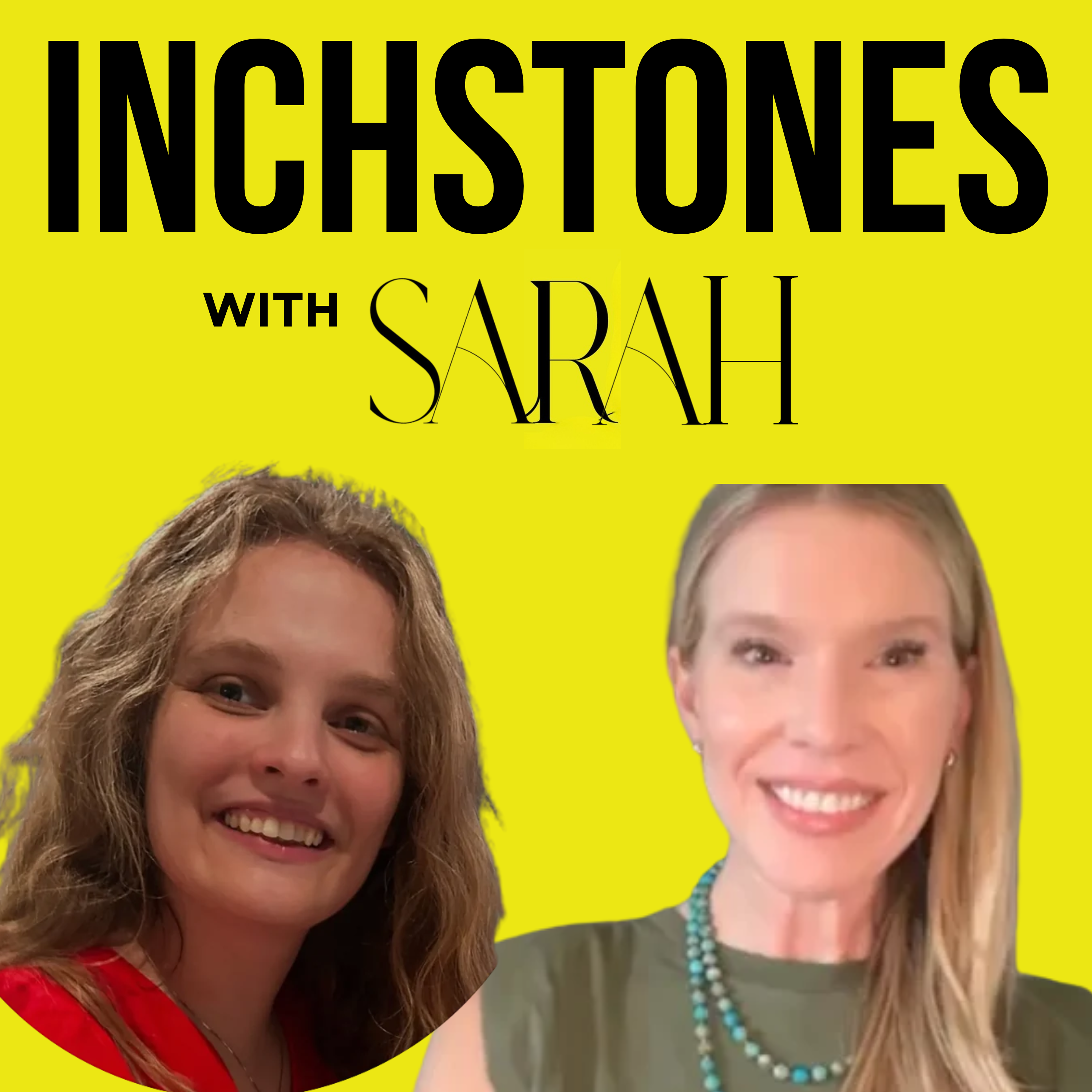
In this episode of the INCHSTONES Podcast, Sarah Kernion welcomes Lora Tompkins, a 20-year-old nonspeaking autistic college student and advocate, and her mother and communication partner, Val, for a conversation about nonspeaking autism, apraxia, communication and presuming competence.
Lora shares prepared responses through a speech-generating device, describing her experiences before spelling and what changed when others began treating her as a capable young person.
Together, they explore:
How apraxia and motor-planning differences can affect communication
Why understanding should not be judged solely by spoken responses
What presuming competence means in everyday life
The importance of age-appropriate education and expectations
Lora's ambitions as a college student and disability advocate
Her description of her voice as one of “resilience and thoughtful rebellion”
Having something to say and being able to say it are two very different things.
Listen at www.inchstonespodcast.com.
Introduction to Laura and Her Journey
Speaker A: Hey everyone. Welcome back to the Inchstones podcast. Where do we even begin today? One of the most complicated assumptions that we make about another human being is that their ability to communicate reflects the depth of what they understand. And for non speaking autistic individuals, that assumption can, can shape nearly everything about how the world sees them and teaches them and includes them. And as a mother to Milly and Mack with non speaking autism, I am so thrilled, so honored, my heart feels like it's gonna burst.
Speaker A: My guest today is Laura Thompson, a 20 year old non speaking autistic young woman who uses spelling to communicate. And what makes today's conversation particularly special is that Laura prepared her answers and we get to hear that through her device. And we're adapting this conversation to the way that she communicates rather than expecting, you know, her to adapt the way we all do. So I love that and I think that the more that we learn that communication is a lot of times unnecessarily does not need words.
Speaker A: So we're going to talk about our spelling journey and about what people may have misunderstood about her before she could express herself this way and what she wants parents of younger non speaking children to know. So I know that so many of you that listen here because having something to say and being able to say it are two very different things. So Laura and her beautiful mother, welcome to Inch Duns.
Speaker B: Thank you so much for having us. Thrilled to be here.
Laura's Spelling Journey Begins
Speaker A: Awesome. Well, we're going to jump right in. So Laura, can you tell me a little bit about your spelling journey? You know, what was communication like for you before you began spelling and then what changed when you found a way to communicate more of what you were thinking?
Speaker B: Okay, so she has some. What was communication like before spelling for you?
Speaker A: Yeah,
Speaker B: search for that and then you can let me know if the iPad, if you need any interpretation from the iPad, but I'll go ahead and
Speaker A: Perfect.
Speaker B: And the iPad will read what she has typed.
Speaker A: Awesome.
Speaker B: Prior to finding spelling, my parents tried everything from sign language to see but nothing worked because apraxia kept me from using them effectively. Yes. So we tried sign language. We did pen AAC devices for 10 years. But as she said, her apraxia, her brain body disconnect kept her from using them even with extensive hand over hand training and, you know, modeling and everything. And so our assumption at the time based on, you know, what her body could do was that she didn't understand when really it was just a motor planning deficit where she couldn't make her body.
Speaker B: She knew what an apple and A banana were right.
Speaker A: Yeah. Right. She couldn't
Speaker B: get her body to point to the right card. So they were like, well, she must not know what an apple is or a banana is, when really it was a complete misunderstanding of where the deficit, where the disability was
Speaker A: presuming competence goes so far. And I know that that journey must have felt both so beautiful when you were able to express yourself, but also really tough.
Misunderstandings About Apraxia and Communication
Speaker A: And I just want to know that, like, we. Hearing you say that through your own words, like, is really powerful for moms like me to hear. The next thing that we were going to talk about is, you know, before you could communicate, what do you think people misunderstood most about you? Like, were there things that you understood or that you noticed or felt that the people around you didn't even realize we're there and we're a part of you.
Speaker B: What do people most misunderstand about motor planning? They presume that if our bodies don't do what they ask, it means we don't understand. Yeah. So going back to. Yeah. And she knew so much more than we were able to get from her. She has very. She has some speech, a few words here and there. And because of that, we thought, well, that's the extent of it. That's the limit of what she can communicate. But, but really it was. Yeah. Because of apraxia, which we, we didn't even know the word apraxia until she was 16 years old.
Speaker B: But once you understand what apraxia is, then all the pieces start to fall together. Like, she does have a complete understanding. Her receptive language is perfect. It's just that she can't always execute. And that doesn't mean that she didn't understand.
Speaker A: Yeah.
Speaker B: Yeah.
Speaker A: I love it. You know, and I, I noticed that, that strong eye contact, I, I feel that with my kids too. It's just such a bond. You know, I, I got introduced to apraxia really early on in Milly journey, which I don't know if that was a positive or a negative when I think back on it, because it probably put a fear in me that I sh. It was like, it was like, too soon. It was like a little too soon. Post diagnosis at 2. So I, I, That I hear you say you hadn't heard about until she was 16, like, at that chasm.
Speaker A: Just goes to show you, like, how some people get, you know, attenuated to something earlier on yet maybe it's not the right time. And then some people have a delay on it. There's no systemic understanding, which also contributes to the confusion
Speaker B: mass. Right? Yes. Like
Speaker A: we're in the same country and we are both highly functional mothers and we still got wildly different information. And honestly, Laurie, you remind me so much of my Milly that why should two moms get such different information? Right?
Speaker B: Right.
Speaker A: It's just. It's wild to me.
What It Feels Like to Be Non-Speaking
Speaker A: So. All right, Laura, let's go back to you. So when. What does it feel like to be a non speaker who has thoughts and wants to express, but a body that doesn't cooperate? Like what. What do you wish other moms like me and your mom, or you know, siblings or teachers? Like, what do you wish they knew about that experience? Lay it on us, sis.
Speaker B: Oh, you had an extra letter there. Go ahead. It feels like being stuck underwater screaming for help, but no one can hear you. Ouch. Yeah,
Speaker A: I know,
Speaker C: but
Speaker B: it's. Yeah. I can't even imagine what it's like to be all completely in there and aware and everyone's talking around you and about you and like you don't have any idea about what's. Yeah, yeah,
Speaker A: yeah,
Speaker B: yeah.
Speaker A: Well, I hope that you know that whenever you. The more that you share that, the more that it puts a fricking flame under moms like your mom and I to do more.
Speaker B: I know just that that image of someone being stuck underwater.
Speaker A: Exactly.
Speaker B: It's so vivid. And you're screaming. So vivid.
Speaker A: It's so, so vivid. Thank you for sharing that, Lara. I. You know, we. We have to be able to hear that over and over again.
The Power of Presuming Competence
Speaker A: And just like any human, it takes multiple times for us to hear the certain thing, to really understand it. So I appreciate that so much. You know, now that you're older, what do you wish? Maybe parents of younger non speakers, like children like Milly and Mac, knew, like, if you could speak directly. I mean, you can say it to me like as a mom or a dad, but who's maybe wondering if they're ever going to find that reliable way to communicate?
Speaker B: So
Speaker A: what would you tell
Speaker B: them? Yeah, I would start with one of the questions you had asked. When you asked, what did it feel like the first time someone presumed your confidence?
Speaker C: A gush of joy. My world shifted in that moment.
Speaker B: A gush of joy. Her world shifted so long before she became an open scholar, when I first learned to presume her competence, that's when she said her world shifted. She said it didn't happen when she first had her first open communication, which was for me, the most amazing thing. But for her, it happened that first day when she walked into a spelling session and her Provider talked to her like a 16 year old instead of a 6 year old. Yeah. So presuming. Zooming. Competence is free. It's. You could do it way before you.
Speaker A: Exactly.
Speaker B: Spelling.
Speaker A: It's
Speaker B: like it cost you nothing. But just. What? Well, I
Speaker A: will tell you. I mean it's so true.
Speaker B: Yeah. See the
Speaker A: reaction? I mean, no, there's no downside.
Sibling Dynamics and Being 'Painfully Typical'
Speaker B: No.
Speaker A: Like I, I will tell you, you know, like having a typical 13 year old and Milly is 11 and her brother's nine. You know, there was a very classic shift in Milly as she got from like 10 or 11 and it was really cool to be able to. And again, I'm, I, I don't say this as like a pat on my back, but like talking to her like a tween. Like. Yeah, Mels, I know this is annoying. Like, this is like she, she's. She's an 11 year old and she's also the middle child. And I, I don't, I don't know if you have siblings, Laura, but when you.
Speaker A: My Milly is the middle child, like devil may care does not literally give a rat's tush if anyone like. And that's just, that's just Milly That's not because of her autism. That's just
Speaker B: right.
Speaker A: She's the middle kid.
Speaker B: That's her first.
Speaker A: And my son knows the. My son is the baby. He is the baby of the family. He is the only boy. So it's sibling dynamics plays into this too. And I love that you're sharing that. Yeah. The presuming of competence and treat them like this, like, like she's 11 now. And offer those. No possible
Speaker B: harm can be done, but there's
Speaker A: no harm for.
Speaker B: No. And think of the harm done when you treat them 10 years younger than they actually are out of the trauma. And I've apologized to Laura many times, the trauma that that can bring on so that there's no downside to presuming competence and just talking to them at their age level, reading to them at their age level, teaching them at their age level. It can
Speaker A: only,
Speaker B: it can only bring good things.
Speaker A: I think that's should be the title of your book because you know, there's no downside to that. People have so many opinions on basically everything in this. As. As we make decisions as parents in this world. There's no downside
Speaker B: to
Speaker A: presuming competence. None.
Speaker B: No. And I learned that when I was training to be a provider, when we learned about the least dangerous assumption that you've probably heard of, which is if you teach a child something and they're not capable of learning it, no harm done. But if you
Speaker A: don't,
Speaker B: but if you don't teach them and they were capable, think of all the harm you're doing. So.
Speaker A: That's right.
Speaker B: I started operating from day one on that least dangerous assumption of just assuming. Assuming that she was completely capable. She doesn't know everything. She's not a savant. She's not. She's very bright, but just means that she's capable. That's all you have to, that's all you have to lean into in the beginning. Not that they're. Oh, you don't have to think these are all brilliant people. But yeah, they're capable of learning and they.
Speaker A: Capable.
Speaker B: They want to learn. They want to be. I
Speaker A: see that,
Speaker B: I
Speaker A: see that so much with my two and being a boy and a girl. They, they do. They're just different, like they're different kids. You know, like I always say, like sometimes there's things like what's just my son being a little nine year old rascal boy. Right? Like yeah, he's an eloper. He scares the heck out of me sometimes. And he's also like a little mini Tarzan and he's a nine year old boy, you know, and it's. I. The more that we can lean into that part and not be so having such like statement based things about like it's this, it's because of this.
Speaker A: No, sometimes I just think it's a little nine year old boy or sometimes I just think it's like an 11 year old tween who is really annoyed that her sister has a bigger room.
Speaker B: Yeah.
Speaker A: Like I think that sometimes, like when Milly will go into Morgan's room if she's at basketball practice and I find her in there and I'm like get out. She's gonna be so mad at you. Get out.
Speaker B: She's like, what can
Speaker A: you.
Speaker B: Big room, Mom.
Speaker A: Exactly. Yeah, exactly. And it's. And I'm like, I know we're gonna get you a bigger bed for Christmas.
Laura's Personality Beyond Spelling
Speaker A: It's just the things that they're just, they're just, we're all painfully typical. There's no, there's no way around it, Laura. I, you know, again, you're. You, you're so able to be so concise and, and sharing your, your spelling journey. What are some things about you that have nothing to do with spelling? Like what are the things about you that you just that it makes. Laura. Lara.
Speaker B: I am ambitious and want to
Speaker A: do all I can to free on speakers voices Love, love. It's most simplest pleasures, isn't it? About all of us. Well, I really appreciate you sharing all that today. I really need your hair journey because I love your curls.
Speaker B: I know,
Speaker A: right? Yeah. Seriously, I need that. I
Speaker B: don't know where that came from, but she just, she wakes up.
Speaker A: I love them. They're the most natural, beautiful mermaid beach curls. So I'm jealous of that. But I really just thank you guys for this and for sharing who you are with with us and here on Inchstones You know, this community is full of mothers of non speaking autistic children. And, you know, I, along with so many, spend an extraordinarily large amount of time wondering what my children are thinking and what they understand and what they wish they could tell me.
What Does Your Voice Sound Like
Speaker A: And conversations just remind me about a why every day and every inch zone matters. Why we have to remain curious. It's the most. It's again, I love that you're saying this, Val. It's free. It's free to remain curious. It's free to presume competence about the person that we can immediately observe. That's. That's our children.
Speaker B: You had asked her. It is, it's. It's completely free and harmless. But you asked her a very interesting question. You asked her, what do you wish people would ask you? Which I thought
Speaker A: was
Speaker B: a great question.
Speaker A: Yeah.
Speaker B: And. And she said that she wished people would ask her,
Speaker C: what does your voice sound like?
Speaker B: What does your voice sound like?
Speaker A: Oh, yeah,
Speaker B: I'm getting chills because I was like, wow. Yeah. What does your voice sound like? And then she gave her answer.
Speaker A: Let me see.
Speaker C: My answer would be, my voice is one of resilience and thoughtful rebellion.
Speaker B: One of resilience.
Speaker A: Thoughtful rebellion. Yes,
Speaker B: thoughtful rebellion.
Speaker A: I'm with you there.
Speaker B: Yeah,
Speaker A: I'm with you there. That's awesome. That's awesome. Well, you have a beautiful laugh too, and I love a good hearty chuckle, so. Well, if there's anything else that you've been waiting to answer, feel free to say it now.
Defending the Validity of Spelling
Speaker A: And I just know that the conversations like this matter enormously. That even what you did share is going to carry so many.
Speaker B: Well, you did ask a question about how she responds when someone questions the validity of the spelling
Speaker A: method. Yeah,
Speaker B: they
Speaker A: do
Speaker B: all the time, unfortunately. And she says,
Speaker C: I tell them to watch me in action.
Speaker B: Watch me
Speaker A: in action.
Speaker B: Yeah,
Speaker A: that's right.
Speaker B: Because seeing is believing and
Speaker A: seeing is believing.
Speaker B: Yeah. And in the beginning, when we're doing a lot of prompting, it's easy to kind of question the validity. But if you See her and she's typing and the board's still, I mean it's really hard to deny people still will, but it's hearing, hearing that your kids are getting spelling in their school.
Laura's Dreams for Advocacy and the Future
Speaker B: Like Laura's dream is to see spelling in every school and to see every child who's diagnosed get a set of letter boards and have therapy spelling that's covered by insurance and all, all these things that, that need to be happening that aren't yet happening. But stories like yours give us great hope that in the future this is the way it's going to be because that's her dream. And when she first became open, right, she wanted to. Hi. She wanted to study neuroscience and figure out apraxia. But then as journey went on, she decided she wanted to be, be an advocate more than she wanted to do that.
Speaker B: So now she's in college and she's studying communications and sociology.
Speaker A: Oh, girl after my own heart. I studied relationship science and I think there's so many there you can do that. Neuro science actually blends really well into that.
Speaker B: And she knows that doesn't mean she can't learn more about that. Right?
Speaker A: That's the thing. That's the thing is that you learn so much through the study of communication and human relationship that it actually does infer a lot about neurology and how we're all built. You know, I, I think that in the wave of the world we live in now with AI and technology development, you know, I'm even, I'm even starting to hear a lot of incredible new technology for spellers that will, I hope that we see to fruition and the conversations that like we shouldn't even be thinking that this is not covered by insurance.
Speaker A: Like this should be a, this is a, this is a human right. And I think that the more in which that we just keep having one on one live reality shown like we're doing right now, and that people intake that even the people that are not living this world that are open enough, that's where we find those little cracks and that's where the light gets through.
Speaker B: Right. And it's parents like you with all your free time or out there. Yeah. No, but you're getting the word out in spite of everything that you're dealing with in your life.
The Priceless Gift of Connection
Speaker B: And we appreciate people like you that are out there and talking to the right people and getting the word out so that more people are aware because there's a huge lack of awareness that this methodology even exists.
Speaker A: I know, I know. And, and when you do See it. You know, I've sat in so many sessions now, and you're just. There's a. I. I use this phrase a lot on the podcast. There's a life luxury in watching your child. I don't care who they are. Like any child's child, any person's child. Watching your child share with you, however that looks and how they learn and then be able to express that back is like, you can't purchase that. You literally can't purchase it. So when you allow for an environment to give that to your child, it's a gift to yourself.
Speaker B: It's
Speaker A: just
Speaker B: like,
Speaker A: I leave those sessions just like, it's so beautiful,
Speaker B: and
Speaker A: I can't buy that.
Speaker B: Yeah, she told me early on, you have to stop asking me how did you know that. Right? Because
Speaker A: I know. I know. Laura, we're trying. We're trying
Speaker B: and she understands, but you're right, it's priceless. And especially when you waited and some people wait 20, 30 years. We waited 17 years to hear what she had to say. So now we just hang on.
Health Tracking and Closing Thoughts
Speaker B: Every word. It is totally. And every word is amazing. Incredible.
Speaker A: I have to ask, are you wearing a. Are you wearing a whoop band? Lara,
Speaker B: this is. This, this is her ID bracelet.
Speaker A: Love it. Okay, I was wondering about that because, like, there's all these different products now about how to keep best track of, you know, health and everything. And I know that's
Speaker B: great. She has an aura ring that keeps. Oh, she
Speaker A: does. Oh, good. Oh, awesome.
Speaker B: Her aura ring tracks her sleep and stress and all those, all those health. Yeah.
Speaker A: Well, I really thank you guys for sharing your journey and your perspective and your experiences and you are one person. And I really do believe that we're all put here to like expand and you gonna continue to expand as you as Laura and I get to expand as Sarah and your mom gets to expand as Val. And the more in which we just show up, move the needle 1% Inchton by Inchton. It really does make a difference. And if everyone listening, if this conversation has resonated with you, please, you know, follow along at inch Jones, leave a rating, share the episode with another parent, caregiver or educator because it really does go to show you that we are meant, we are built as humans to help one another on our journeys.
Speaker A: So thank you so much for being here, Laura and Val,
Speaker B: thank you.
Speaker A: And until next time on the Inchstones podcast,
 Apple Podcasts
 Castbox
 Castro
 Goodpods
 Moon FM
 Overcast
 Pocket Casts
 Podbean
 Podcast Addict
 Podcast Republic
 Spotify