Who Speaks for Profound Autism? The Fight Over the Future of Autism Research with Tyler Hudson & Olivia Rojo
Game plan
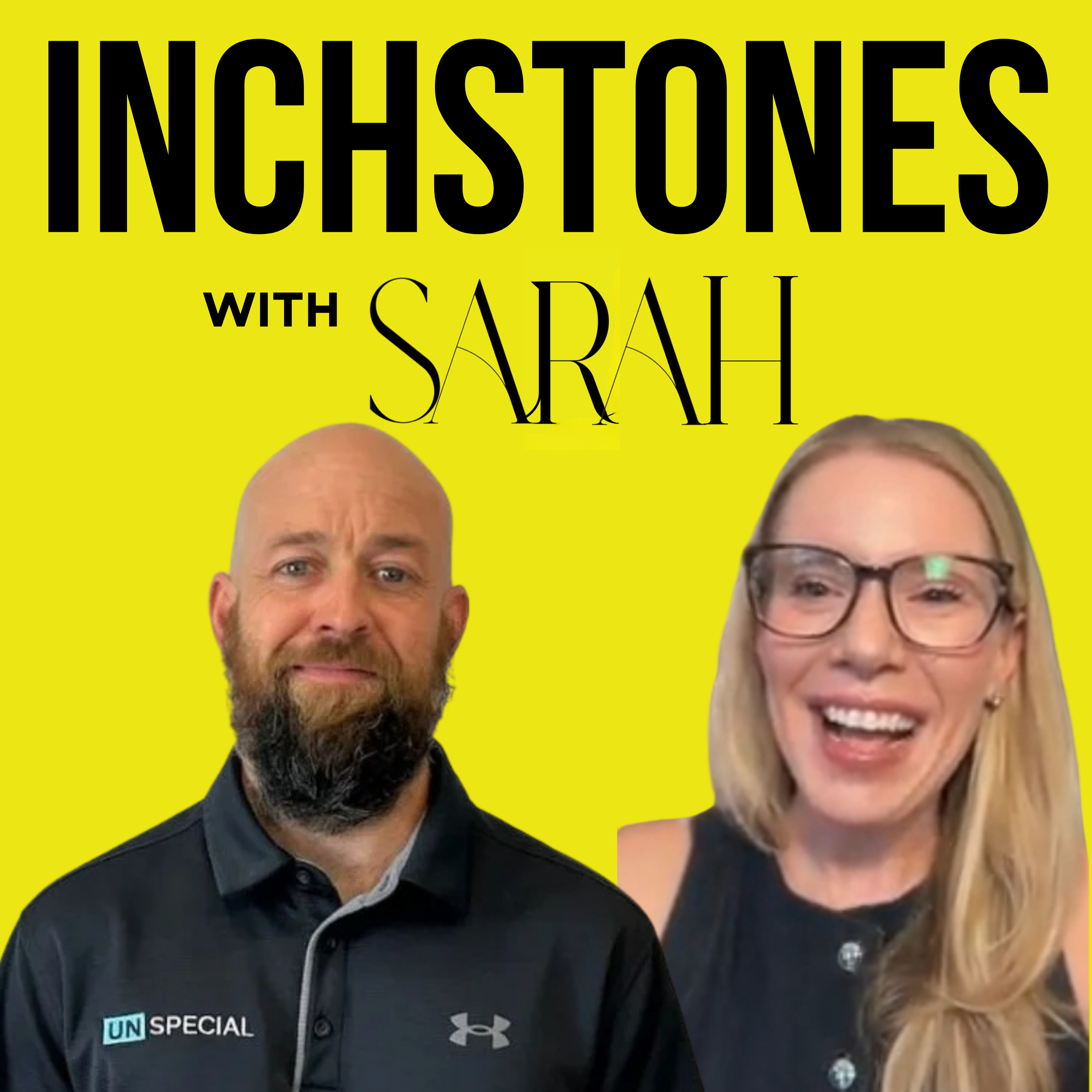
Who gets represented when the government decides the future of autism research? In this episode of INCHSTONES, Sarah Kernion is joined by advocates Tyler Hudson and Olivia Rojo for an urgent conversation about profound autism, caregiver stories, special needs parenting, and the families asking federal autism research to better reflect people with the most significant support needs.
At the center of the conversation is the Interagency Autism Coordinating Committee (IACC) and its working draft for the next federal autism strategic plan. Sarah, Tyler, and Olivia discuss why the proposal has generated such intense debate—and why families raising children with profound autism believe this moment could help bring greater attention to a population they say has too often been missing from autism research.
But this conversation goes far beyond one government document.
What should autism research be trying to understand? Should researchers investigate causes, regression, medical complexity, communication challenges, gastrointestinal problems and other co-occurring conditions? How do we improve quality of life for autistic people today while still investigating the most disabling presentations of autism?
And perhaps most importantly: who speaks for autistic people who cannot advocate for themselves?
Tyler and Olivia discuss the tension between autism self-advocacy and parent advocacy, including their concern that conversations about autism acceptance can sometimes fail to represent families living with profound disability. They argue that acknowledging severe disability does not diminish an autistic person's dignity—and that accepting an autistic person and wanting to understand the causes of their suffering are not mutually exclusive.
Olivia also shares the reality behind her advocacy: she is moving to another state seeking better care for her daughter while leaving her older daughter behind. Her family's experience opens a larger conversation about autism sibling dynamics, caregiver stress, profound care needs, and what happens when today's siblings become tomorrow's next of kin.
Tyler shares his own family's experience trying to understand his son's recurring gastrointestinal problems and the exhaustion of parents being told, once again, that they are essentially responsible for experimenting, observing, adjusting, and trying to determine what helps their child.
The three also confront a difficult reality of nonverbal autism and special needs parenting: much of the labor and suffering involved is invisible to people who have never lived it. Families may navigate dysregulation, communication barriers, medical issues, hypervigilance, sibling impact, and uncertainty about lifelong care—while simultaneously being criticized for talking publicly about those realities. This isn't a conversation asking for pity.
It's a conversation asking for visibility, research, better systems, and the willingness to remain curious about what we still don't understand about autism.
As Sarah says near the end of the episode: Severity is not the opposite of dignity.
Families can fully love and accept an autistic person while still asking why they are suffering, what medicine may be missing, and what science still needs to understand.
In This Episode
00:00 — Why Sarah, Tyler and Olivia came together for this conversation
01:55 — What families should understand about the IACC working draft
03:25 — “Autism is not a reason to stop looking”
03:50 — Profound autism and representation in autism research
06:35 — Why visibility matters for families with significant support needs
07:05 — Olivia's decision to move states seeking better care for her daughter
08:45 — Profound autism, terminology and representation
09:50 — Who advocates for autistic people who cannot self-advocate?
14:05 — What the proposed autism research framework could change
16:40 — Biomedical research and why families want researchers to keep asking questions
18:20 — What parents and allies can do now
23:00 — Reorienting autism research instead of repeating old systems
25:25 — Medical complexity and investigating what may be affecting autistic children
26:55 — Tyler's son's gastrointestinal issues and the exhaustion of figuring it out yourself
29:10 — The physical and emotional health of autism caregivers
30:50 — What happens to siblings when parents are gone?
32:25 — Autism sibling dynamics and future caregiving responsibilities
33:30 — Why families share the realities of profound autism publicly
36:55 — What allies need to understand about special needs family life
37:40 — Tyler's call to action: systems must change to produce different outcomes
39:30 — Olivia's call to action: “Nothing changes if nothing changes”
40:35 — Why severity and dignity can coexist
Resources
Read the Interagency Autism Coordinating Committee (IACC) working draft and learn more about opportunities for public participation in federal autism research and policy.
Follow Tyler Hudson and Olivia Rojo for their perspectives on profound autism, caregiver advocacy, disability, and family life.
Subscribe to the INCHSTONES Podcast for caregiver stories, honest conversations about nonverbal autism, and the realities of special needs parenting, profound autism, disability caregiving, communication, research, family life, and raising children with significant support needs.
In the Elevator With Olivia and Tyler
Speaker A: Here we are. For one of the craziest episodes to happen here on insurance, we're doing something a little different. That wasn't Tyler Hudson's actual cow. That was him. Welcome. I'm joined by. Here we go. Here you go. You're getting the real deal of us. Here I am joined by two of the most powerful and outspoken advocates, Olivia Rojo and Tyler Hutch. There is a conversation happening right now about the future of federal autism research and policy that we decided as a. As a collective, very small, but mighty powerful trio that families need to understand, and especially the families living with profound autism.
Speaker A: The iac, the Interagency Autism Coordinating Committee, released, as you all know IT, is a 336 page working draft for its next strategic plan. And initially, the public was only given a few days to review it. And then something happened. They extended that. And while we can agree or disagree on whether that pause was worthy, allow for the comment period to expend and extend. I'm sorry. And we now got the chance to light our communities ablaze with commentary to flood in support of the draft. And it's begging us to encounter much of a deeper discernment about autism itself.
Speaker A: What should autism research be trying to understand? Should we be investigating causes? Should we be investigating regression? All these things keep coming up. And families and advocates representing people with profound and complex medical needs are finally feeling like there's a centering on true autism. So we're gonna jump into a lot. Olivia and Tyler, thank you both for being here. And here we go.
Tyler on the Autism Plan
Speaker B: Here we go.
Speaker A: Olivia, when you. Let's. Let's just go right to the draft when you first began reading it, and what made you think, okay, my family, the ones that are coming to me to understand and be a voice, what do they need to be paying attention to in this?
Speaker B: Okay, well, to be honest, it all started, even going to a TACA conference. You know, I remember walking in there and I'm like, why? Why aren't these people in any committees in the government for autism? I couldn't comprehend it, you know, because I saw them there. And after they announced who was part of the committee and seeing who was in there, I cried tears of joy. And when you learn that it's more than just autism and, you know, the people that are in there, in their heart, I mean, I didn't.
Speaker B: Yes, obviously, I read the document. I even searched for keywords of things that I didn't agree with. I didn't find them, you know, because it's. It's long and the summary, all of that, but just knowing who's in there in their heart, that that was everything for me because I legit cried when I found out who it was and what their mission is. And I think because a lot of people do not go to these type of conferences to learn, you know, that behind the label there could be a lot more going on. They just stay at the surface.
Speaker B: So I mean, everything that we need is there. I mean, it's not like they reduced anything, right? And it's not like they're taking away anything. They enhanced and they're zooming in. That's, that's basically what it is. We could cover everything, but that's what they have done. They have added. That's what's the most important part of it all.
Speaker A: Well, as the chair of the ia, Sylvia Fogel, wrote, one line that I keep going back to is that autism is not a reason to stop looking. I don't know about you, that hit home. So, you know, let's jump to you, Tyler. What set you on fire that you had to share and get your people on board?
Speaker C: Well, very much the same as Liv having a connection with these members that are on the iac, realizing it's parents of profoundly affected individuals. So they get it. It's not just pie in the sky virtue signaling for them, it's actually real world. They've been in the trenches for decades. Sylvia, again, I believe this was on her Instagram. She beautifully summarized something I feel like my advocacy has been trying to do for so long, which is to make life better for people with autism whilst seeking honestly to limit its most disabling outcomes.
Speaker C: And that's it. You could just put that on the plan and that gets my vote because we have to live in this space where we have to make the world better for autistic people. And as I talk about with my advocacy a lot, a lot around grief that often lends towards creating autism as a superpower. And we gravitate towards these stories that make us feel better and we want to celebrate autism. But if we're not limiting the prevalence of its most disabling expressions, we are not doing the work that needs to be done for future generations.
Speaker C: And that's me, that's my heart. So same when the plan came out, reading through it, particularly the establishing of the cohort of profound autism that's going to, like Liv said, magnify. It's going to receive. They're massively underrepresented. I think it's 6% of clinical studies include people with Profound autism. And as you said with the investigation point, we should be treating this as a crime that needs investigated or at least a medical emergency that requires further investigation. But that gets swept under because of the public sentiment to police the way people talk about autism.
Speaker C: And then what really lit the fire for me was seeing advocates in the space come out in disagreeance of this plan because of those preferred desires to police the way we talk about autism. And I just thought, I'm doing teeth week this week. I'm just letting the teeth out a little bit just to get. Get loud about it. Because also in being contact with the iacc, they, they're very. You know, there are friendlies that are on the public appointed members that are parents of people with autism, but there are also federal members who are appointed by government agencies.
Speaker C: And if they don't see public support for, they may not pass this draft, which means it will not pass, which means our window of time to effect real change closes. And that's why. That's why it's urgent. That's why it's teeth week.
Speaker A: I love it. I think the call for visibility is something I write about so much on the substack, which is that if you were to actually live and integrate into the lives of the families of the most severely affected, you would have a wildly different point of view.
Tyler Hudson on the Need for More Autism Speakers
Speaker A: And, Liv, I know that you talk about that a lot when it comes to your daughter and the choices that you're making around that. Can you speak more to that and what those choices look like?
Speaker B: Well, I mean, as you guys can see, I'm literally here on the floor because all my furniture is gone. I'm moving to Arizona just to get her better care, you know, And I'm leaving my other daughter behind, the oldest. So my heart's gonna be cut in half just because I know she also needs a break from the dysregulation, you know, from just everything, her nervous system, I see it shocked. She's the one that motivated me to do something or do more. You know, what I'm doing. The day that in tears, crying, had an anxiety attack and said, when is she going to stop, Mom?
Speaker B: When is this going to stop? I can't take it any. And that's when I was like, we can't live this way. And the following day, I pulled out my teacher retirement. So now in Arizona, thank God, I have found the help that she needs. And that help includes people that are in the committee. They're aware of the kind of help our kids need. And I'm going over there to get her that help. And that's. That's why it's infuriating to me that people do not understand the gems that we have in the committee right now.
Speaker B: We've never had this. And I'll never get how people don't understand that autism is very medical for those that are profoundly affected. You know, you target the medical aspect, the autism volume goes down, the severity can go down, and it changes. It changes our quality of life. I'm not trying to change who she is. You know, I'm trying to bring out who she is. And that's why it's something that I do not understand why they're fighting so much against it. And like Tyler said, it's. They're only part of research 6% right now.
Speaker B: And everything that's being policed when it comes to the language. I mean, I've talked about before when I went to a profound autism like conference, that there was an individual who blocked the term profound autism being included in the Autism Cares Act. You know, he. He or she felt offended by that term. And exactly to what you were talking about, Sarah, he. It was like, you can't put that. He told or she told the legislator that they could not include that term because it offended them. And the legislator felt pressured.
Speaker B: Right. To not because why this is an autistic voice. And what ended up happening, they didn't include it, and research kept dropping because of offense. And we're here again dealing with that exact same thing when this can change so many things for our children when it comes to, you know, to this
Speaker A: draft plan, you know, without giving them PR time here on a, you know, tiny niche of a niche podcast, you know, the nothing about us without us phrase becomes one of my most prickly points. Tyler, I know that you. You have a bit of an opinion on that too, so let's.
Speaker B: No, he does not, Noah.
Speaker A: That Tyler Hudson, not him.
Speaker C: Yeah, so, yeah. So look, the autistic self advocacy network by definition excludes those that can't self advocate. And who speaks up for them? It's the parents. But we, our voices are not deemed legitimate because we ourselves are not autistic. And it just the strange dichotomy that is at play. I mean, we're talking miles years down the track. The best case scenario would be that this spectrum does actually get split and we receive different diagnostic titles. Now, it's not an invisible task because there's no easy place to draw a line.
Speaker C: But if you don't believe me, look, in my comments, you've got people that say, I'm autistic, but I don't have a disorder. It's like, with all due respect, if you have autism, you have a disorder. It's in the fricking name. Okay? I don't say that to say something's wrong with you. I'm saying something's wrong with the label that you carry. And maybe we should be advocating for your own unique label. And the easiest way to do that, because we don't have identities tied up into it, is, to boot, profound autism off of the spectrum.
Speaker C: I mean, that's the easiest path of least resistance for me to give it a separate name so that when we advocate about autism, they don't think we're talking about them. They've done a bang up job of kind coming in and making the space their own. Kudos to them. They can have the label because it doesn't mean anything anymore. Like, let them have it.
Speaker B: No, it doesn't.
Speaker C: Do your cosplay. Do whatever you want to with it.
Speaker A: Exactly. Do your cosplay for it. This is a great segue because I saw something online and I've seen this.
On the DSM 6 Public Comment
Speaker A: Anthony Hopkins talks about this directly. Have you seen this at all? Where he basically said, I've been apparently diagnosed with autism. I truly do not care.
Speaker C: Yeah.
Speaker A: Yes. Could probably Qualify under the DSM 5 categories if someone had a microscope on my life for autism too. Right. I mean, I could. I absolutely know I could because I've actually done the assessment and I realized, oh, my gosh, I could just say that I sometimes do do that. Well, guess what? And I think what's so powerful is that what Anthony Hopkins.
Speaker C: Just living. It's part of the human experience. And with things like recall bias, someone plants the idea in your head that, hey, may, the reason you do this is because you have autism. Then you go, hmm, that must. That must be autism. And because it's diagnosed based on behaviors, it's social contagion. The idea plants in your head. I guarantee you I could get an autism diagnosis because I know how to behave autistically. Nothing to do with the fact that my son cannot communicate. These two are not the same thing.
Speaker A: We're just laughing because it's so absolutely ridiculous.
Speaker B: And you know what? Like me, like, trauma also can do that to you. You know, like after, like, my mom suddenly passed, my brother and I realized that we do things we didn't used to do before. And that's how I was going. Like this right now, because now I'll do things like this and you know, I'll like stim like this.
Speaker C: And we laugh and we're like, you're so autistic.
Speaker B: Exactly. And my brother and I always say, imagine if we were to take a test, we would probably, you know, like fit.
Speaker A: Like. Why are you so swaying right now, Liv? What's your hyperfixation?
Speaker B: Exactly. It's just crazy that that's where we've gotten to this point. You know, when I would hear the word autism, I would think of my Cousin who's almost 40, and others like him. And now it's just, you have to add too many. What? Adjectives? Adverbs. Someone actually asked me, they're like, okay, so very high support needs. And then high support needs and profound autism. What's the difference? And I'm just like, honestly, I don't even know any. It's a lot. You know, when before it was just autism and you would think of kids like ours and now you have to add high support needs.
Speaker B: Very high support needs. Profound autism, moderate. It's just. It doesn't have any meaning anymore. Honestly. It really does.
Speaker C: I was going to say the working draft doesn't. It doesn't address these issues. Like, it just creates a tiny little carve out for this, this distinction. It's not splitting the spectrum, but it's creating framework that, that the ball will be rolling, that maybe the DSM 6 could include some of this framework from a societal level. And just one point on the whole public comment section, like, I have been assured the whole reason that happened is because it's government. And government is a pardon, is a show at the best of times.
Speaker C: And there is factions at play within the federal part of this committee that are intentionally trying to stall this progress. And the whole draft being released and only having four days to make a public comment, that's just government. It is not that people aren't wanting to be transparent about what's in the plan. So, I mean, we know how bureaucracy works. But then this, this coordination committee has to get it exactly perfect. No, it's a government panel, right. It's going to have bureaucratic troubles that are then twisted to say, see, they don't want it to be transparent.
Speaker C: Now it's just government. That's just how it works.
Speaker B: No, and, and the fact that the old one was locked away for two years and I don't even think there was public comments and nobody said anything about it. And there wasn't this whole like, issue like there is now. You know, there's just such hypocrisy when it comes to that because that one was locked away for two years and no one said anything.
Speaker A: Oral comment. And when I tell you and Liv, I know you've spoken to this Tyler, I'm sure you'd agree the power of those people, I was humbled to just even take in their two minute introductionary like curriculum via dates because the amount of work that they have done in biomedical research and, and, and, and, and, and studies is so absolutely incredible. And when you think back to Tyler, what you said before, internal societal conditioning of what we're told we're allowed to absorb. Step into that IAC room.
Speaker A: I didn't, I'd never heard of some of these people. Why is that? Why haven't I heard? And I believe that maybe we can begin to ask these researchers which the working draft I thought was beautifully spelled out the millions of dollars to these biomedical root cause medicine of these co, co occurring conditions.
Speaker B: Yeah. And you know what? Like I know for a fact as people were livid about them supposedly giving four days, they just want to get to work. They just want to get kids to be helpful. They do. They already know everything. You know how they say experts, these are the experts, the true in depth experts. So people want to, you know, jump into conclusions as to the four days. No, they just want to get to work and help these kids because they cannot wait any longer. That's why, you know, everything that they know needs to be shared.
Speaker B: And those of us that are already part of that world, we knew why they were just so ready to just, you know, get it out there.
Speaker C: And I think that Sylvia, at the end of that, I think it was the last IAC meeting, I believe, believe it was Sylvia, when it came time to vote and all of these government agencies were going, oh, we're going to have to table this or defer or I've got to speak with. And she just said, what have you been doing? Like what are we even doing? You've had this in front of you for months. We are here to meet and we are here to vote.
Why are you not voting?
Speaker C: Why are you not voting? And then it's just like parents that are fed up just wanting to get to work. So I completely see that.
Speaker B: Yes.
Speaker A: Like kicking the can. Yes. That's what it felt like. It felt like when, when, when I saw these and heard that and Sylvia so beautifully played the, you know, the beautiful velvet hammer. Oh, she's a velvet hammer.
Speaker B: I love her velvet hammer. She is man.
Mitochondrial Alleviation Comments
Speaker A: What? So now that we have a few days and you know, I've obviously Submitted my comments. And you guys have as well. What do you feel like is the best for the allies and people that aren't that, that are sitting with us, that don't know our worlds, that don't know exactly what we're undertaking but what we're asking for and how they can support beyond that. Because I think that what's going to happen is this. Who knows what these comments are going to do in terms of forwarding, but what do we do to get the numbers increasing on what we're trying to share about how this is so positive?
Speaker C: Great question. It does feel, it does feel like a popularity contest at this point.
Speaker A: Like I feel like we're on a.
Speaker C: Advocacy is in response to other, other advocates that I disagree with. And I'm like, oh God, I can't let, I can't let their following hear this and not have accurate information.
Speaker B: Adrenaline.
Speaker C: I hate that. It does feel like a popularity contest, but that's government. Government's going to vote with what has public support. I can't answer you, Sarah. Beyond this, I think it's just see what happens. But what I know, see, I'm a big picture guy, right? You guys are, you're in the biomedicals. I mean, my son's 18. We're fine. We'll be fine. I'm worried about the big picture. And what I see happening is this is a chance for the systems that we have in place to function properly. And it's going to be slow.
Speaker C: And the analogy I keep coming back to is in the movie Lincoln, you know, Abraham Lincoln's character is wanting to work with Tommy Lee Jones's character. Tommy Lee Jones is a full blown abolitionist. He wants reparations for African Americans. He wants the right to vote. He wants to give land, he wants to take. He wants to tax the whites to give to the blacks, right? And Lincoln's going, hey, yeah, one day. That's not what's on the table right now. What's on the table right now is the abolition of slavery.
Speaker C: So temper this so that he, and he says, what's the point in knowing true north if it leads you straight into a swamp? And I feel like, because there's, there's pushback from this plan on the far side that says it doesn't go hard enough. There are no, there's no mention of injuries in this plan. You know, there's. So there you've got this contingent that doesn't think it goes far enough. And I'm saying, all right, let's give bureaucracy a try and let's try to navigate this swamp because that's what's happening and it's going to be a slow, painful process.
Speaker C: So what happens there? I don't know. I just don't want this group to step straight into the swamp. First cab at the rink.
Speaker A: Very, very well said. I think that that is also what I've love to research individually is that it's a very masculine and beautiful way of putting it. Because I think that women tend to be very persnickety, as I say about those little details. And I will talk about mitochondrial cocktails with Liv, but probably not with you. No, right.
Speaker C: Won't do it.
Speaker A: But to that. But to that end. But to that end it takes both. And I think that it's really good that we have your thoughts on this and broad opinion because you're right, we do have to tread and be. Tyler grounds us. Tyler grounds us.
Speaker C: Because I'm thinking about my girls. I'm thinking about the atmosphere in society they will raise their future children in.
Speaker B: Same here.
Speaker C: Because we are very fortunate to be in a position that we are sorted. Like me and Libby. We've got our situation handled. We're now fighting for the future. So I miss out on the mitochondrial cocktail conversations because that's just not where we are in our life. But I do want to see this succeed. But then also we have the luxury again. This is the luxury I face that I can say, you know what if this gets too much for me, I'm unplugging, I'm drawing a line and I'm moving on. But so many families don't have that opportunity.
Speaker C: You know, like live your moving states to get the care that your child needs. Far out, Far out. We need. There's big picture but I need to be grounded in the day to day tiny little push nickety details because they are very real consequences for those that are in the trenches right now.
Speaker B: Yeah. And I just feel like we're here to like, you just kind of calmed me down in the sense that, you know what, maybe all this is to recalibrate to get things going and started. Maybe that's what we're doing with all of this. Just, you know, going back to Sarah's question. So like what that, what's next? What now? How do we get this going right. And maybe this is a recalibration at least putting attention to that.
Autism parents speak out for their kids
Speaker A: I love the word recalibration. My. One of my biggest words that I love to use is reorientation. And I think that within reorientation comes A lot of destruction and creation think that we have to destroy the absolute old models in order to build something new. And it's not going to be overnight, it's not going to be immediate. Speed kills. Sometimes speed kills, it does.
Speaker C: And so to break the system down is to lead people to reject it by exposing why it's just not working. And that's a slower process.
Speaker B: There you go.
Speaker A: I'm asking, I know that you are too, to write in a comment just in support, not that you think that your voice is gonna be the one that's heard. And it is this collective effort, regardless of the speed of the bureaucratic system.
Speaker B: CN for me, sometimes what I need to remind myself, and I don't mean to sound like condescending in this matter, but because of everything that I. About my kid, that I've investigated. And that's why I'm so like, you know, this plan and. And trust me, it's going to help because I've done that investigation, like thoroughly. I know how everything is affecting the severity of her autism. And a lot of people still don't understand that. And because I try to, I. When I speak, I'm speaking on facts now.
Speaker B: I'm not speaking on my feelings, on my opinions. I speak with the data in my head, with. With the labs in my hands. And I'm like, trust me, this is going to make such a difference. Why wouldn't we want to proceed? And that's what. Honestly, sometimes I'm like, okay to remember that not everybody is where I'm at when it comes to those things. They might not know it yet, so I need to just kind of like, slow down. But, yeah, for me, it's. It's hard because I know who's in there. I have the data, I have the labs.
Speaker B: It's all facts for me now. I see everything that's impacting my daughter medically, that's, you know, raising her autism volume. And I just want everyone else to receive the same help. And like Tyler was saying, I have to move to be able to get her that help, you know, and it's different type of things that are not part of the treatment that our kids receive. Our kids just receive antipsychotics. That's all they receive. And that's what they wanted to do on that.
Speaker A: Do not go down the rabbit hole.
Speaker B: I'm just. I mean, now that she's getting that help.
Speaker C: Yeah. We went to the doctor yesterday. Lyric has continual massive bowel issues. He's in this weird cycle, like every three or four days. Right now he just gets incredibly constipated and his mood just plummets. And then once he has a bowel movement, he's good. So went to the doctor, you know, our functional medicine doctor and like right. So should be pretty switched on. And we just left so deflated because he literally said these words. Yeah, you guys are the parents, y' all are the experts, you're running, you're running the studies, gotta introduce one thing, make observations, if it doesn't work, pull it back, introduce something else.
Speaker C: And it's just like, hey, have fun running this clinical trial. I'm like, yeah, we've been doing it for 18 years, we're friggin exhausted, like and it's so deflating to keep that energy up of saying I'm going to help bring more order to my child's disorder. Imagine if we had the world's smartest minds working on these things and that could actually say through, through creating distinctions. You know, I got this comment this morning that well it's, it's autism, but yeah, there are co occurring medical conditions and blah blah, blah, blah, blah blah blah.
Speaker C: And so are you suggesting that there's underlying issues that require further investigation, that it's not just autism? Like you say, split the spectrum. They disagree with you, but then they push back. Oh, those are comorbidities. Oh, okay, what does that mean? Oh, that means we need more distinction in the spectrum. So you bring them around to your idea without just smashing them in the face with it. You just present logic and go, hey look, this is what's going on.
Speaker A: Hey, we.
Speaker C: What would be a good idea, split the spectrum.
Speaker A: It's the best solicitation techniques because they use their own words, not, not against them per se, but they're, at some point you're able to stop them and go repeat what you just said.
Speaker C: Hmm, tell me more about that.
Speaker A: I, tell me more, tell me more about that. The that the one thing that I do think that is not very much spotlit in the working draft is the caregiver's experience and research on the physical health of caregivers, which is really something that's so near and dear to me.
On the Caregiving of Autistic People
Speaker A: But do you think that the caregiving aspect can add maybe a bridge in some capacity?
Speaker B: Depends who you speak to. Because I have come upon those that, you know, kind of do have the soft heart and then those that's like, that's your child, that's what you're supposed to do, you're supposed to suffer with. I mean I've had those comments you're supposed to suffer with them. You know, you. If you didn't want a child with a disability, then you shouldn't have had children. And you're just like, okay, yes. So it just. It depends, you know, because I've gotten those comments, too, where they have completely no regard for us whatsoever.
Speaker B: If we're not autistic, we shouldn't speak. Our experience doesn't matter, and it's that simple to them, and it's a shame. And that's where you see it that way.
Speaker C: Yeah, that's where I've tried to expose that cognitive dissonance with my advocacy as it relates to grief, you know, because I hear the same things that you say. But they. Society expects parents to just grin and bear it, but you can't put autism in a neat little box and decide what it doesn't. Doesn't affect. So, thinking big picture again, what happens when I die? My girls become their brother's next of kin. They will be responsible to administrate his care. Not that they will live with him, not that he will live with them, but they will know where he is.
Speaker C: And the outrage that that responsibility is placed on their shoulders infuriates society. And so that's the cognitive dissonance. You expect the parents to just celebrate autism because there is no other option. But when autism threatens someone else's life trajectory, there's outrage, and I applaud that outrage. I want to take that outrage to its logical conclusion, which is to limit the prevalence of the most debilitating forms of autism so that my daughters don't have to worry about their brother and their own future children.
Speaker C: So it's that bigger picture, and it should be. So if it's not just the caretakers, but it's the family, Liv, your daughter that needs a break from her own sister. So you're moving States. My God, what about their stories? And it's. It's not just the caregivers.
Speaker B: Exactly.
Speaker C: The future caregivers, which are the siblings.
Speaker B: Exactly. Which is. Like I said, she's the reason why I'm fighting so hard. It's not even my autistic child, you know? Yes, of course. But the day I saw the suffering, really, when it came to her sibling, and then it all just kind of came together of like, she's the only sibling. Like, Tyler. You have two girls. Right. You know, she's by herself as a sibling, so it would be all on her. And I'm like, I need to do everything I can before I'm gone, you know? Because she would be the next of kin, you know, when her father and I are not here and dad just completely like if I spiral there, it's so hard.
Speaker B: But then, you know, as Tyler says, people get upset when we talk about the siblings taking over. But then they also don't want any institutions or farmsteads. So it's like damned if you do, damned if you don't. You know, they complain about that, but then they also complain about this. So it's just, you know, they don't really leave us many options because everything that we have to do to plan their quality of life or whenever we're gone is just. There's someone gets upset or offended.
Speaker A: Well, you know, I think to myself, I would have a full on camera crew follow me for months. I would love that because I would love to be. Have an expose on what this looks like. Right. Because I don't, I don't think the typical American really can grasp like truly can really grasp what this life looks like. And that's not to shame them, that's not to make them feel like they are less than or that they should feel hashtag blessed for, you know, their, their ease of which they live. But I think to really show reality, I think that we, until we can start showcasing reality more with a, with a magnifying glass.
Speaker B: Yeah.
Speaker C: We need to honestly. Do you know, do you know why a reality show will never happen with kids like ours? Because society wouldn't watch it. Because given the opportunity to reduce our discomfort, we change the channel, we stream a different show. No one wants to watch that. And that's why our individual voices are so important. Because mainstream media is not going to show the profound, profoundly debilitating side of autism. I call it the shadow side of autism. We want to be accepting of autism so we see the superpower stories and that's it.
Speaker C: Very little light gets shed on the profound suffering other than like social media has been fantastic for opening people's eyes to this is what life's really like. But then of course you're exploiting your child, but you're not, you weren't exploiting your child when you, when the Level 1 got up there and gave a beautiful speech at school. Was that on exploitation as well?
Speaker B: Exactly.
Speaker C: See, it's only when we show our reality.
Speaker B: Damned if you do, damned if you don't. Yes, that's, that's.
Speaker C: And it's not. This is not about a.
Speaker B: And Sarah, honestly, I don't show my girl.
Speaker A: Go ahead, Liv.
Speaker C: Go Liv.
Speaker B: Sorry I was saying I wanted to just like, you know, like tell you that I don't show my girl because honestly, like nowadays I don't know if she's just gonna rip her shirt off at any moment.
Speaker A: You're, you're in company that understands that. But in the periphery and in the, you know, the peanut galleries, they can't imagine a life where their hypervigilance is to that extent. And that's what I'm trying to expose, is that it's not the figure, it's the ground. What is beneath that? What is our life exposing to others so that they can go, she's not just talking about her daughter ripping off her shirt. This is something beneath that. And that's what I always wish that inches can do and that we can get allies on our side for this and for our children over anyone else.
Autism: Nothing Changes If Nothing Changes
Speaker B: Yeah.
Speaker A: If there's one thing that you would like to leave as a charge for those that are going to listen to this episode, but as a call to action. And also not just call to action for the commentary, but for what they should be seeking out and what should they be intaking. Because as you said earlier, Tyler and I believe this so fully, we don't even realize the medium around us and what we're doing. Conditioned to think and how we're conditioned to think. So can you, both of you leave everyone with a, a call to action?
Speaker C: I, I just want to clarify too because I think a lot of people might look at this and go, oh, friggin autism. Parents just bitching and complaining like we're pretty tough individuals. Yes, we need a safe space with fellow with like minded people that have shared experiences with us. But this is not about bitching and complaining. This is about actually creating solutions for future generations. And that's the takeaway that if we don't stop kicking the can, if we do what we've always done, we'll always get what we've always got.
Speaker C: There's an economist who says your system is perfectly designed to give you the results you're getting. If you want different results, you have to change the system. So yeah, it's been teeth week. Yes, there's anger and frustration, but it's about real world change. We have to change the system that's giving us the results we're getting. It's gonna be a long hard road. It starts with an email and where it goes from there, stay tuned. I don't know, because it's one battle at a time right now. This is the.
Speaker A: You're right. I'm so glad you Brought that up. Systems drive behaviors. It's one of my favorite lines. Systems drive behaviors. And if you are in the system, sometimes you are unable to identify the things that you need to be changed. And so we, as the three of us and so many others, we are outside the realm of a typical family's orientation system. So we are trying to go, whoa, whoa, whoa. There's a different system over here that is not operating at full capacity. We need some help over here. So I love.
Speaker A: I love that you brought that up. And Liv, what. What would you. What would you say your call to action is for those listening?
Speaker B: Pretty much what Tyler was saying. Nothing changes if nothing changes. You know, and. And I'm not speaking for me, please help me as this, like, poor parent, because we are pretty tough, let me tell you.
Speaker A: We really choose you guys for the Hunger Games. I would totally choose you guys. Yeah.
Speaker B: And I. I look at my aunt, you know, who is 70. I've seen that journey has. Have things improved for her? No, they have not. Nothing changes if nothing changes. I think of the elderly couple I. I've seen at autism conferences with scratches all over their arms, still trying to see if something has changed or improved. Nothing has changed. So that's what I'm trying to say, that it's not just about us complaining that we need help and pity party. Nothing has truly changed. It really hasn't. And this is the time to change it.
Speaker B: Now they taking away from services or other things that have been there. They're adding to the plan, they're enhancing, they're magnifying. So it's not removing things. And why wouldn't we want to make something better if it's. If things are being added? That. That's basically it. That is it. Nothing changes if nothing changes.
Speaker A: That's right. That's brilliant. And you're. You're absolutely right. Nothing change if nothing changes. And I guess I'd like to leave everyone with this too. Severity is not the opposite of dignity. We can love and fully accept an autistic person and still ask why they're suffering, what the medicine might be missing, and what science still needs to understand. I believe that this IAC working draft, which still. Again, we've got a few more days, guys, means families can still speak up and read what you can tell the truth about the reality you live, or if someone in the community that you see that you are in support of that family and ask that the profound autism remains visible in all these decisions that come next, which I believe deeply that we are.
Speaker A: We three are doing our part to do that. Olivia and Tyler, thank you so much for being here and, you know, just being willing to have this conversation. I love that it's teeth week. It's like Shark week. Put you on Nat, Geo and Liv and I will go back to our little detailed life of being the mothers and putting all the plans and details together. But to everyone listening, though, keep noticing what matters. Keep noticing your kids. I know that so many of you are the mothers and caregivers of the children that are most profoundly affected like I am.
Speaker A: And I want you to keep noticing what matters. Keep asking questions that matter. Stay curious, and of course, keep celebrating those inch duns until next time. Bye, guys.




 Apple Podcasts
 Castbox
 Castro
 Goodpods
 Moon FM
 Overcast
 Pocket Casts
 Podbean
 Podcast Addict
 Podcast Republic
 Spotify